
I asked 5 non-technical founders what zero trust means. None of them knew.
One said it sounded like a relationship problem. Another said it reminded him of a banking term. One just laughed and said, “Something to do with passwords?”
These are smart people. They run companies. They make purchasing decisions. And when they land on a cybersecurity vendor’s website with “zero trust” in the headline, they feel exactly one thing.
Lost.
I know because I felt it too. I visited a zero-trust vendor’s website last quarter. I read the headline twice. I read the subheadline. I clicked “How it works.” I read that page for 4 minutes.
I still could not explain it to someone else.
Here is zero trust in two sentences.
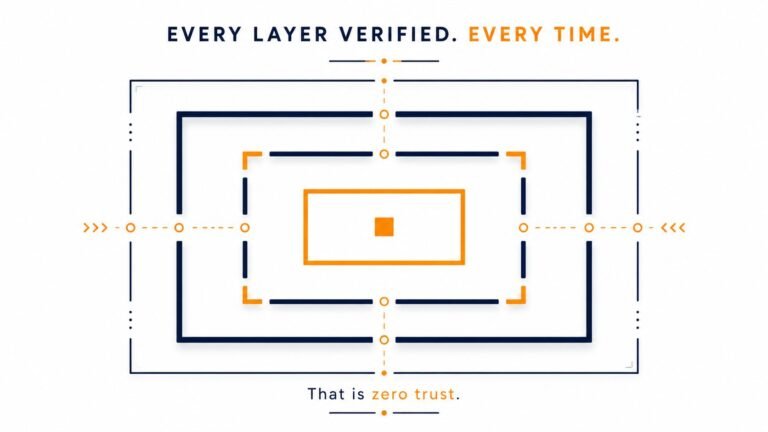
Normally, once someone is inside your company’s network, the system trusts them automatically. Zero trust says: no. Every single person and device has to prove they are allowed to be there, every single time.
That is it. That is zero trust.
It is not as complicated a concept. It becomes complicated the moment security vendors start explaining it.
IT teams love the term “zero trust.” It is precise. It is accurate. It signals expertise to other engineers.
But your buyer is not always an engineer.
Your buyer might be a COO evaluating vendor risk. A CFO approving a six-figure contract. A marketing director was told by their CEO to “look into cybersecurity options.”
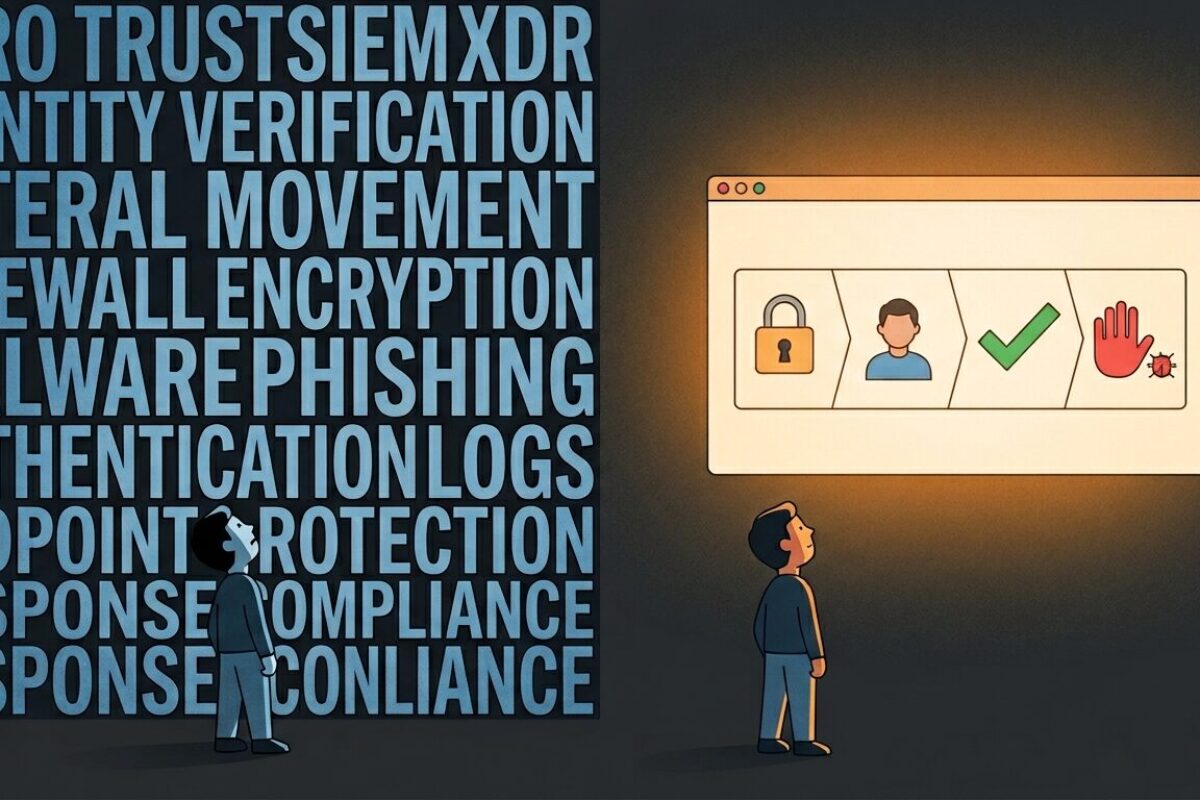
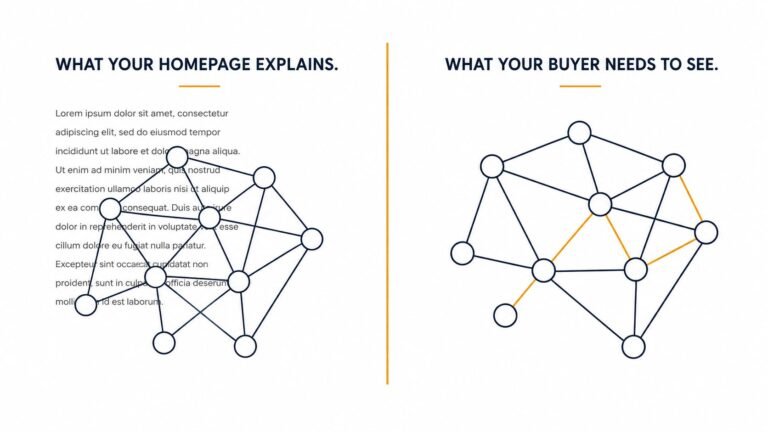
These people do not speak the same language as your product team. And when they land on a homepage full of terms they do not understand, they do not lean in. They pull back.
There is a psychological truth here that most security companies miss.
Confusion does not feel neutral. It feels like a warning sign. When a buyer reads something they do not understand, their brain does not think “I need to learn more.” It thinks, “this is not for me.”
And they leave.
I want to be clear about something.
Zero trust is a genuinely important concept. The companies building it are solving a real and urgent problem. The technology is impressive.
The failure is not in the product. The failure is in the translation.
Your CISO understands zero trust deeply. Your CMO is trying to sell it to people who have never heard the term. That gap between understanding and explanation is where deals die.
It is not a marketing failure. It is a communication failure. And communication failures have communication solutions.
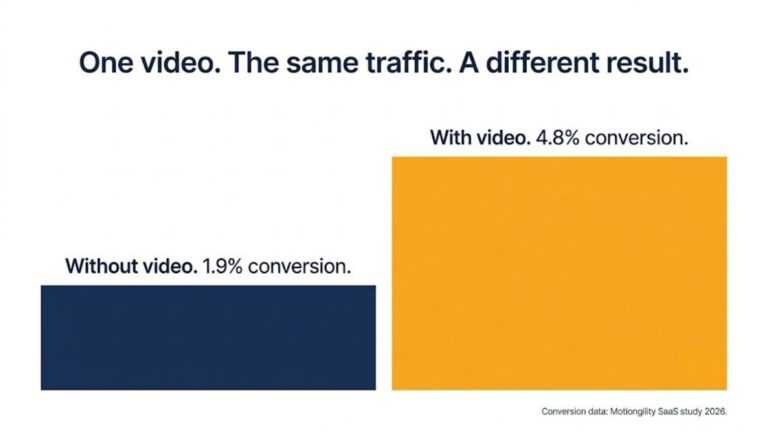
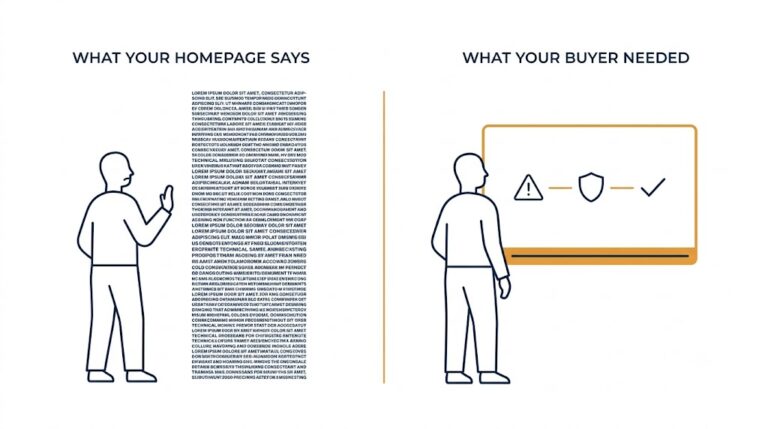
You do not need to simplify your product. You need to visualize it.
Animation can show a person logging into a network. Show the system quietly checking their identity in the background. Show a threat being blocked before the person even notices. Show the outcome: work continues, data stays safe, the company sleeps at night.
No jargon required. Because a visual does the work the words cannot.
That is what I built. Animated explainer videos that translate technically brilliant security products into stories that non-technical buyers actually understand in under 60 seconds.
You can see how this works across complex B2B products at ayeansstudio.com/portfolio. Every video started with a company that had a communication gap. Every one of them closed that gap visually.
I worked with a security company whose founders spent 18 minutes on every sales call just explaining their product concept before they could even start pitching.
Eighteen minutes. Before the pitch even began.
We built a 60-second animated video that showed the problem, the solution, and the outcome with zero technical language. Just a clear visual story.
Their next sales call opened with the video. The prospect said, “Oh, I get it” inside the first minute.
That sentence, “Oh, I get it,” is worth more than any feature list you will ever write.
If your homepage uses zero trust, XDR, SIEM, or endpoint telemetry in the first paragraph, I want to read it.
Not to criticize it. To help you translate it.
I am offering a free script review to any cybersecurity company that wants to know how to explain their product visually in 60 seconds. No cost. No pitch deck. Just an honest look at your messaging through the eyes of a non-technical buyer.
Book your free review here. It takes 15 minutes, and it might be the most useful conversation you have this quarter.

Hi, I’m Ayan Wakil, the founder & CEO of Ayeans Studio.
Check out these and many other tips in our blog!
We provide services that successfully satisfy your Business Objectives
Ayeans Studio is a German-based Video Production Company, all set to deliver our pride services to US-based Clients