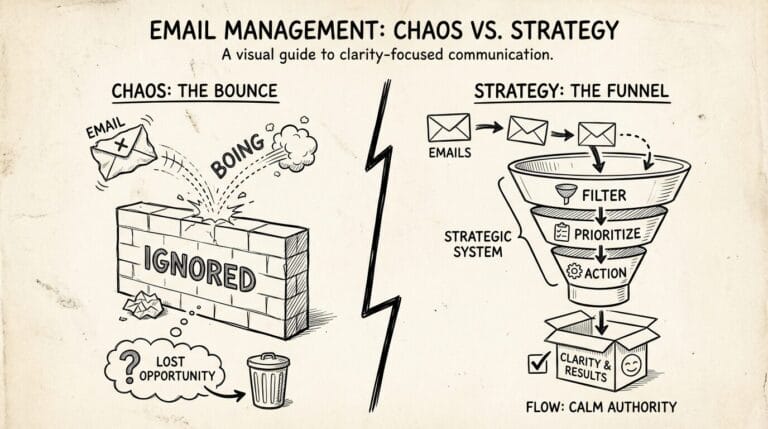

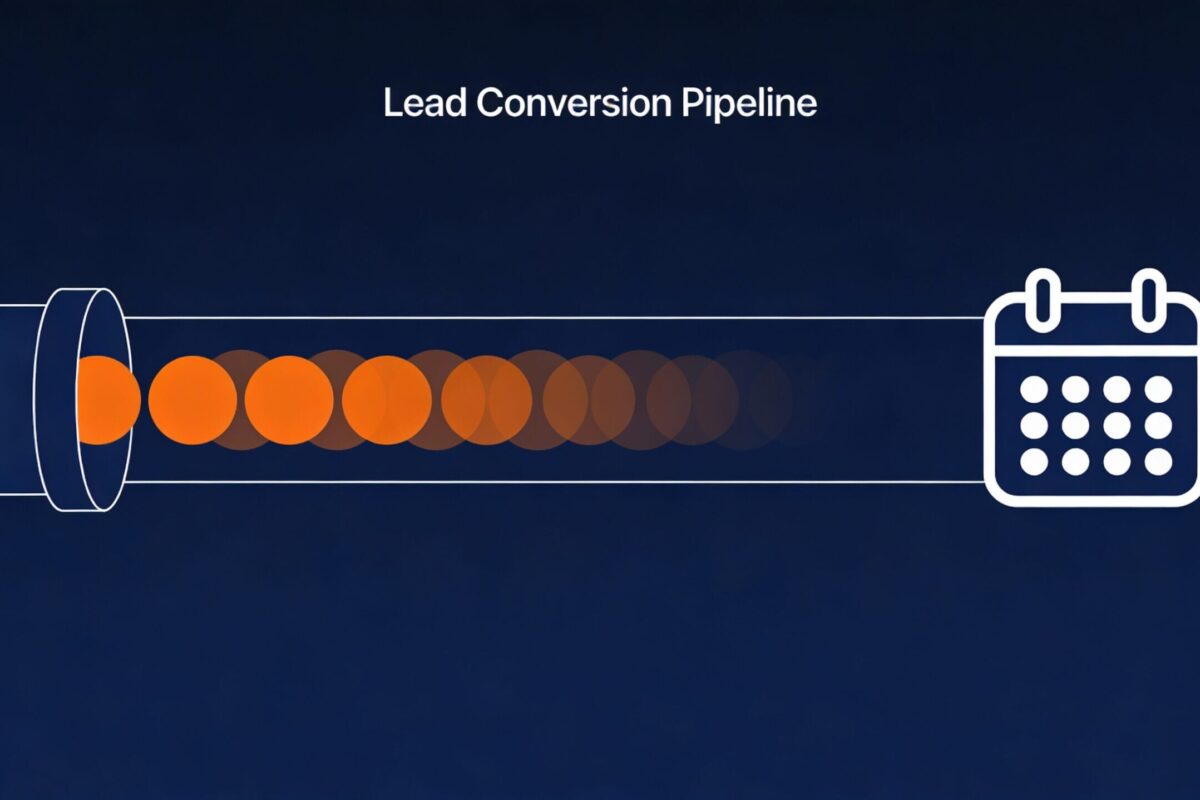
Most pipelines don’t fail at closing; they die before they breathe.
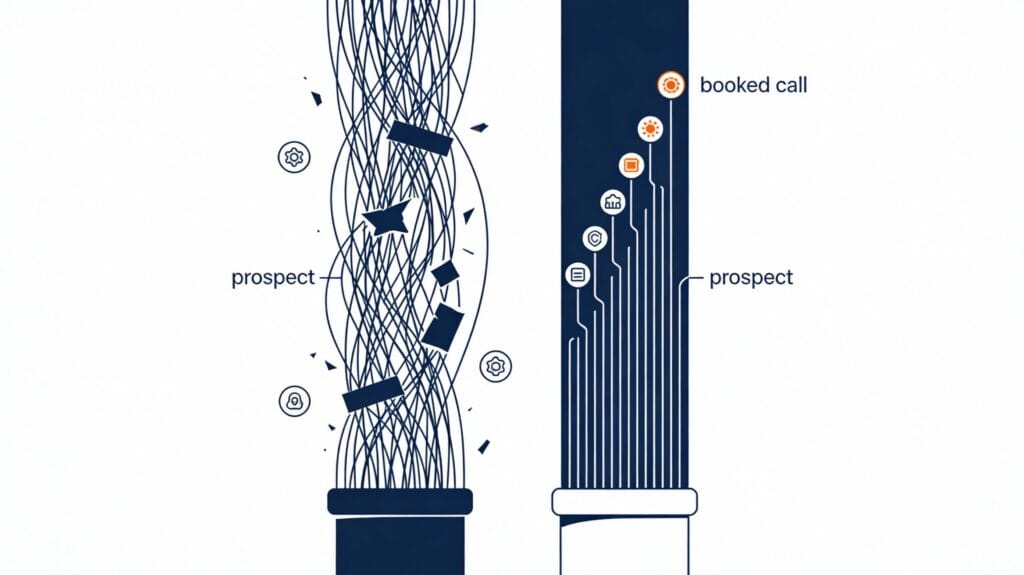
Every week, I audit revenue systems where founders celebrate 500 new leads while their calendars stay empty. They’re tracking vanity metrics while their sales pipeline failure rate climbs past 70%. The problem isn’t your sales team. It’s not your pricing. It’s that your pipeline was DOA from the first touchpoint.
After working as a fractional CRO with seven companies simultaneously, I’ve seen the same pattern destroy otherwise solid businesses. Founders confuse motion with progress, mistaking lead volume for pipeline health.
Your team runs campaigns. Marketing celebrates MQLs. Sales logs calls. Everyone’s busy.
Yet conversion stays flat.
This happens because most companies build pipelines backwards. They start with volume targets instead of conversion architecture. They chase leads before understanding why prospects disconnect.
Think about your current pipeline. How many leads enter versus how many book calls? If you’re like most B2B companies I work with, that ratio is devastating. Not because your product is wrong, but because your pipeline creates friction where it should create clarity.
The real metric that matters: touchpoint-to-conversation rate. Most founders never track this.
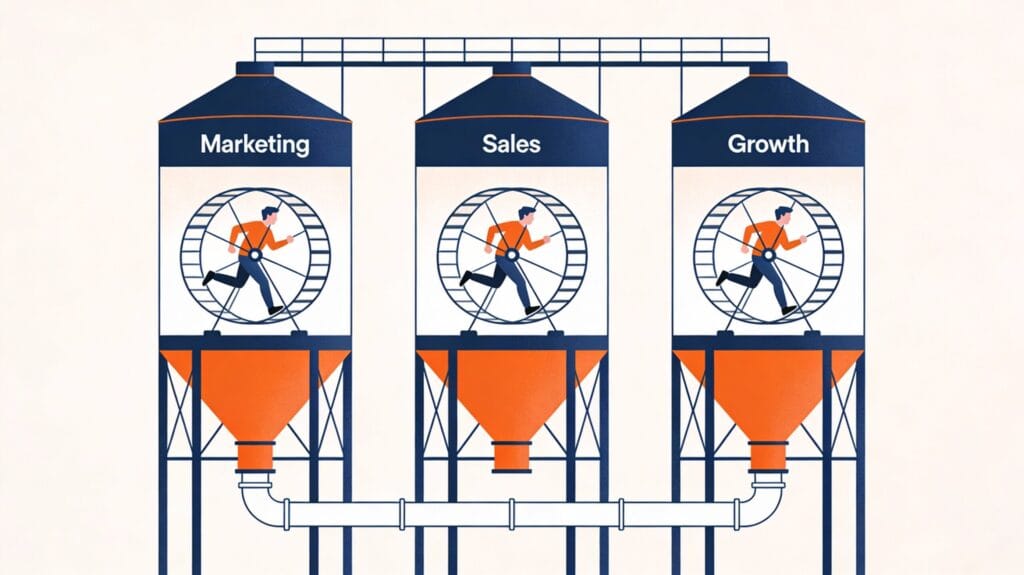
Three years ago, I started documenting every pipeline audit across SaaS, B2B services, and eCommerce companies. The data was brutal.
One SaaS founder came to me with 2,000 monthly visitors and zero booked calls. His team blamed lead quality. His investors blamed the sales team. The real culprit? His pipeline created cognitive load instead of removing it.
We mapped every micro-decision a prospect faced from the landing page to the calendar link. Seventeen unnecessary friction points. Each one seemingly minor. Together, they formed a wall that killed momentum.
This pattern repeated across industries. Agencies are losing prospects in the proposal stages. SaaS companies are watching trials expire unused. Service businesses are getting ghosted after initial interest.
The common thread wasn’t sales technique. It was an architectural sales pipeline failure.

Revenue architecture beats sales tactics every time.
Here’s the framework I use to turn dying pipelines into predictable revenue systems:
When I implemented this with a B2B logistics platform, their demo booking rate jumped from 3% to 23% in six weeks. No new traffic. Same sales team. Just clarity where confusion lived before.
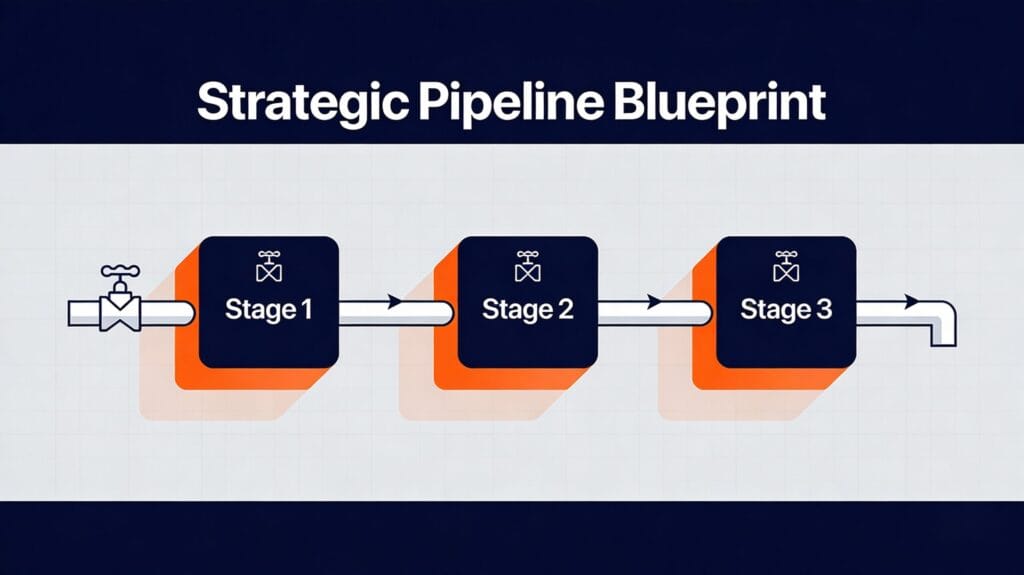
The best CRO work is invisible. Prospects don’t notice when friction disappears; they just move forward.
One agency CEO called this approach “revenue system therapy.” His pipeline went from 50 leads generating 2 calls to 50 leads generating 11 calls. The math is simple: fixing conversion beats chasing volume.
Another founder in B2B SaaS saw his sales team’s morale transform. Instead of chasing cold leads, they were having quality conversations with educated prospects. Their close rate doubled because prospects arrived with clarity, not confusion.
These aren’t outliers. Across the seven companies I currently work with, we’re seeing 20-30% conversion improvements by fixing the architecture, not adding tactics.
The counterintuitive truth: you probably have enough leads. You just have too much friction.
Here’s where most companies miss an opportunity.
Complex offers need simple explanations. But most companies either over-explain (creating confusion) or under-explain (creating doubt).
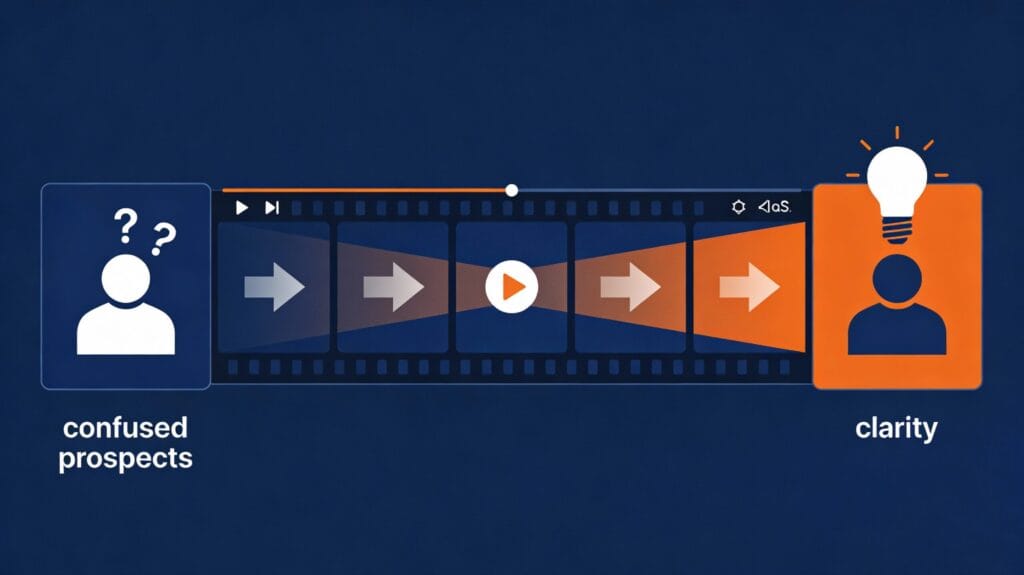
Visual explainers and strategic demo videos aren’t marketing assets, they’re conversion infrastructure. They deliver clarity at scale, reducing the cognitive load that kills pipelines.
I’ve seen 90-second explainer videos replace 30-minute discovery calls. Not because they sell, but because they educate. Prospects self-qualify, arriving at calls with understanding instead of questions.
One enterprise software company reduced their sales cycle by 40% just by placing a strategic demo video at the right pipeline stage. Their prospects stopped asking “what do you do?” and started asking “how do we start?”
This isn’t about production value. It’s about strategic placement of clarity tools inside your revenue system.
If your pipeline isn’t converting, adding more leads won’t help.
You need architectural change, not tactical adjustments.
I offer pipeline clarity audits for founders ready to fix their revenue systems. This isn’t a sales call, it’s a diagnostic session where we map your pipeline’s friction points and identify the 2-3 changes that will unlock conversions.
We’ll look at your current touchpoint-to-conversation rate, identify where prospects disconnect, and build a clear path to predictable pipeline performance.
Book a pipeline clarity audit if you’re tired of celebrating lead volume while your calendar stays empty. Let’s fix the architecture before you scale the problem.

Hi, I’m Ayan Wakil, the founder & CEO of Ayeans Studio.
Check out these and many other tips in our blog!



We provide services that successfully satisfy your Business Objectives
Ayeans Studio is a German-based Video Production Company, all set to deliver our pride services to US-based Clients