
The page loads and the first thing you feel is the weight of it.
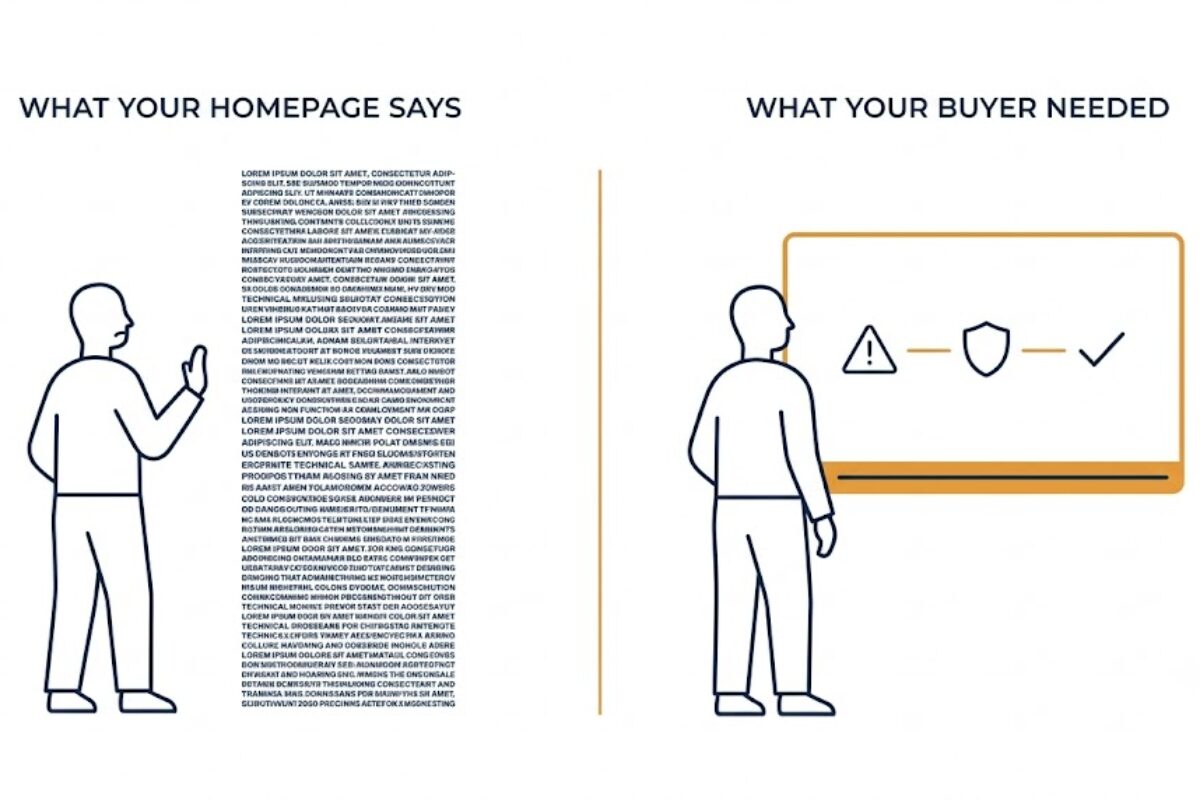
Dense text. A headline that takes two reads. A product screenshot that means nothing without context. You scroll once and there is more of the same, technical, heavy, built for someone who already knows what they are looking at.
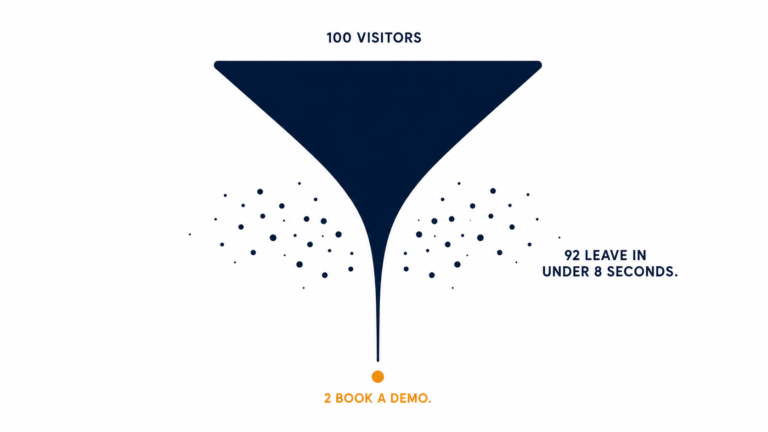
Most cybersecurity homepages lose non-technical buyers in under eight seconds, not because the visitor is inattentive, but because the page was never built for them. This article explains the three patterns causing that loss and what a 60-second video does to fix each one.
Accuracy is not the same as clarity.
Your product team is proud of the copy on your homepage. Every claim is defensible. Every technical term is correct. But the CFO who just clicked your LinkedIn ad does not need to be defensible. They need to be understandable.
When a non-technical buyer reads something they cannot follow, they do not try harder. They assign the confusion to your brand and leave. That moment costs you a demo call you already paid for with your ad budget.
The first pattern I see constantly is a homepage that describes the solution without first making the problem feel real.
A visitor who does not already fear the threat your product addresses will not feel urgency about the solution. If your homepage opens with your product’s capabilities rather than the consequence of not having it, you have skipped the one sentence that could have made the buyer lean forward.
A 60-second video fixes this by opening with the threat itself. Not a statistic. A scene. A credential stolen quietly. A network breached slowly. The viewer feels the problem before the product appears. By the time the solution shows up, they are already looking for it.
The second pattern is a hero section packed with terms that mean nothing to a non-technical buyer.
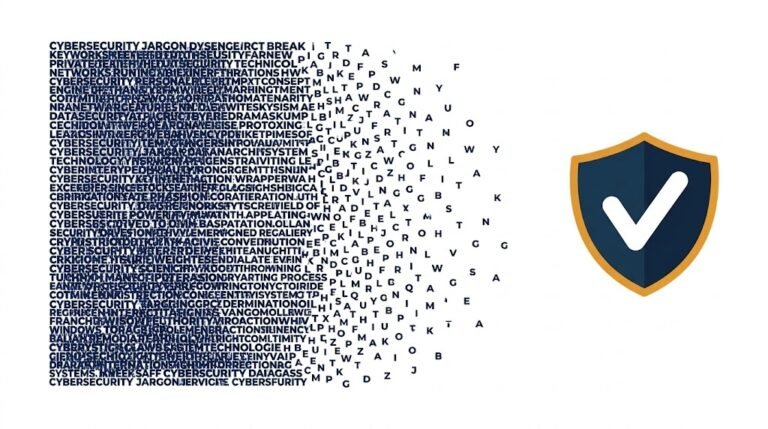
“Zero trust architecture.” “Endpoint telemetry.” “Lateral movement detection.” Each of these phrases is precise. Together in the first paragraph, they function as a wall. The buyer reads the first two and stops. Not because they are unintelligent. Because the page gave them no foothold.
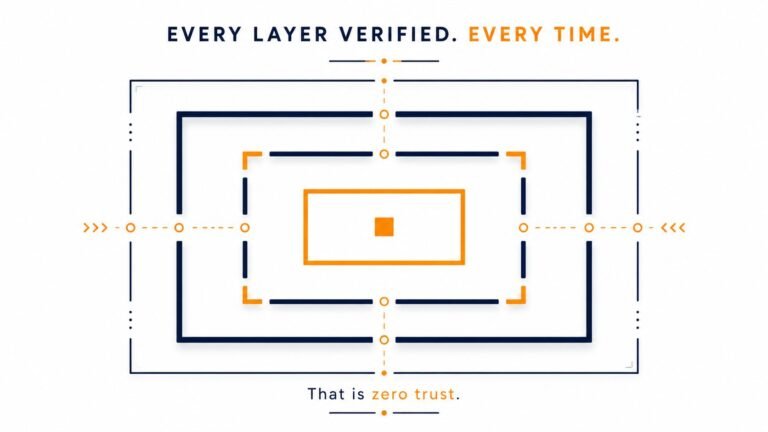
A 60-second video sidesteps this entirely. Animation can show zero trust without naming it. It can show lateral movement without using the phrase. The concept survives the translation because the visual does the explaining the words were failing at.
You can see how this approach works across complex technical products at ayeansstudio.com/portfolio.
The third pattern is a homepage that shows features but never shows what life looks like after the product is in place.
A CFO does not evaluate security tools on technical merit. They evaluate them on business consequences. What happens to the company if we have this? What happens if we do not? Most cybersecurity homepages answer neither question in plain language.
A 60-second video can end on the outcome. The team is protected. The breach that never happened. The board that stops asking worried questions. That final frame is what gets a CFO to book a demo.
You do not need a new homepage. You need one clear visual story placed where your buyer lands first.
A 60-second animated video in your hero section picks up where your headline falls short. It shows the threat, the solution, and the outcome in the time it takes a visitor to decide whether to stay. That is the entire job.
If you want to know whether your homepage is losing non-technical buyers right now, drop your URL in the comments. I read every one, and I will tell you honestly which of these three patterns I find.
If you want to go deeper, book a free 15-minute call here and we can talk through what a visual explanation would look like for your specific product.
The best cybersecurity products in the world are losing buyers to clearer competitors every single day. Clarity is not a design choice anymore. It is a revenue decision.
Ayan Wakil
Most B2B SaaS homepages convert between 1 and 3 percent of visitors into leads. Cybersecurity homepages frequently sit at the lower end of that range or below it, because the products are more technically complex and the buyer is often non-technical. A homepage that communicates problem, solution, and outcome clearly in the first eight seconds, with a short video supporting that message, can push conversion meaningfully above the category average. The benchmark matters less than the specific drop-off points on your own page, which you can identify through scroll maps and session recordings.
Cybersecurity products defend against threats that are invisible. Unlike a CRM where the value is immediately visible in daily use, a cybersecurity product's value is the absence of something bad. Most cybersecurity homepages describe how the product works rather than what the company avoids by having it. Non-technical buyers, meaning CFOs, COOs, and business founders who control budget but did not come from a security background, need to feel the risk before they can evaluate the solution. When a homepage skips that emotional step and opens with technical architecture, the non-technical buyer has no frame of reference and leaves.
Yes, consistently across B2B categories. Unbounce research has shown video on landing pages can increase conversions by up to 80 percent. The reason is not the video itself. It is what the video does that text cannot: it shows the product story instead of describing it, which removes the cognitive effort of translation from the visitor. For cybersecurity specifically, where the core value proposition involves something invisible, showing the threat and the resolution in 60 seconds creates understanding faster than any amount of written copy.
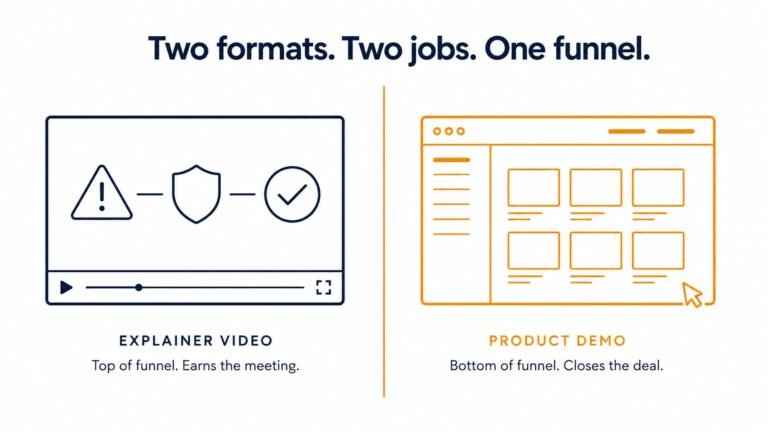
Sixty seconds is the ceiling for a homepage explainer. Wistia engagement data shows that viewer retention drops sharply after 90 seconds on videos embedded in homepages. The goal of the homepage video is not to replace the sales demo. It is to create enough understanding in the first minute that the visitor wants a demo. Pain in the first 15 seconds, product response in the next 30, outcome and call to action in the final 15. That structure works for non-technical buyers across every cybersecurity sub-category.

Hi, I’m Ayan Wakil, the founder & CEO of Ayeans Studio.
Check out these and many other tips in our blog!
We provide services that successfully satisfy your Business Objectives
Ayeans Studio is a German-based Video Production Company, all set to deliver our pride services to US-based Clients