
The Anatomy of a Cybersecurity SaaS Explainer Video That Books Demo Calls
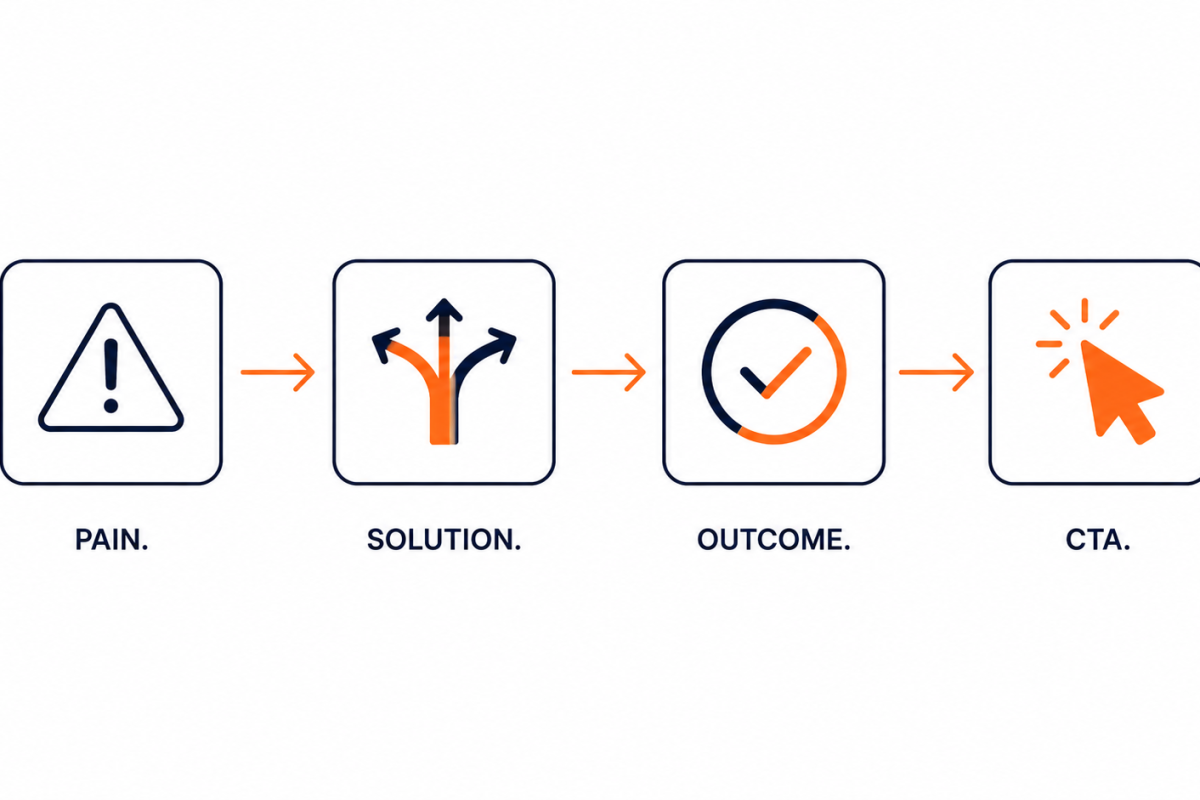
A cybersecurity SaaS explainer video that books demo calls has four parts in a fixed order: pain, solution, outcome, then call to action. Skip or reorder one and the viewer either never feels the problem, never trusts the fix, or never learns what to do next.
The timings below are for a 60-second cut. They are my working numbers, not a law.
Show the threat before the product exists. No logo, no product name.
Example: “A finance manager logs in at 2am from a city she has never visited. The password is right. Nobody is watching.”
A buyer who does not feel the problem has no reason to care about the fix.
Show the product responding, in plain verbs. Pick one mechanism and show it by what it does, not what it is called.
Example: “The system notices the login does not match how she normally works. It asks for more proof. The attacker has none. Access stops.”
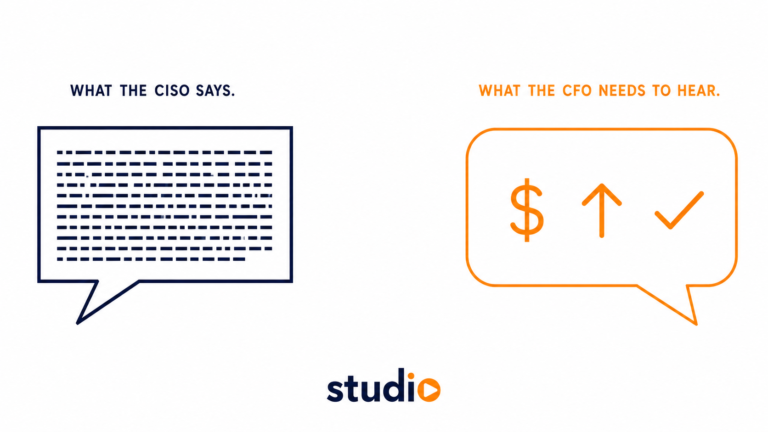
I write these so a CFO could repeat the sequence back after one watch. See how I structure them →
State the business result, not a capability.
Example: “Monday morning, nothing happened. The finance team never knew. The report shows one attempt, blocked.”
This is the sentence that travels. It is what a champion repeats to a CFO.
Match the ask to a stranger. On a homepage, “See how it works on your accounts” beats “Request a demo.” In an email to a prospect who already replied, ask for the call.
Here is a composite, not a client. A video opens with the threat, shows a polished dashboard catching it, and ends on the logo. The viewer learns the product does something. They never learn what changes for the business.
The champion forwards it to the CFO and gets back: “Nice, but what does it save us?” The video explained the product and left out the reason to buy.
I have no measured numbers for this pattern. It is the failure I would test for first, not a statistic.
Write your four parts as four sentences first. If they do not fit on a sticky note, the script is not ready.
If you want a second pair of eyes on yours, book a Call → and send me the four sentences.
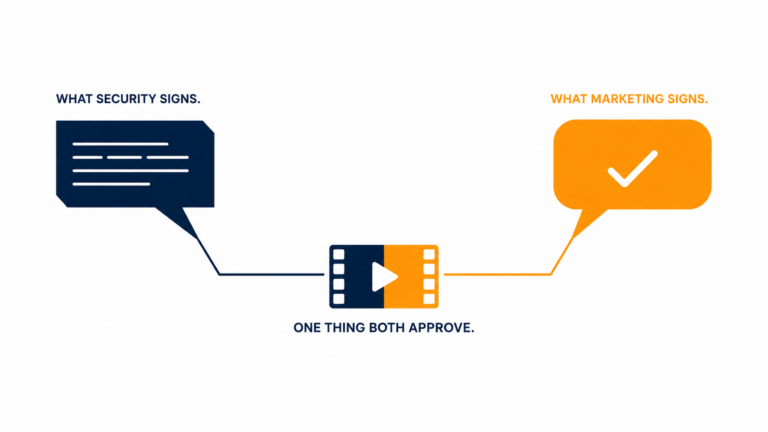
Approve the story, not the adjectives.
Ayan Wakil
Four parts: pain, solution, outcome, call to action. Use plain verbs, one idea per sentence, and no acronym your buyer would have to Google. Read it aloud. Where you stumble, the viewer will too.
Roughly 15 seconds of pain, 25 of solution, 12 of outcome, and 8 of call to action. That is about 130 to 150 spoken words. Treat the split as a starting point and adjust it to your product.
Pain first, because the solution has nothing to answer without it. One exception: if your viewers already know the problem, say they arrived by searching your category, open with the outcome and keep the pain short.
Check in this order: is a part missing, is it longer than 90 seconds, does it sit where visitors land, is the call to action too big for a stranger. If all four are fine, look at the traffic. Sometimes the audience is wrong, and no video fixes that.

Hi, I’m Ayan Wakil, the founder & CEO of Ayeans Studio.
Check out these and many other tips in our blog!