
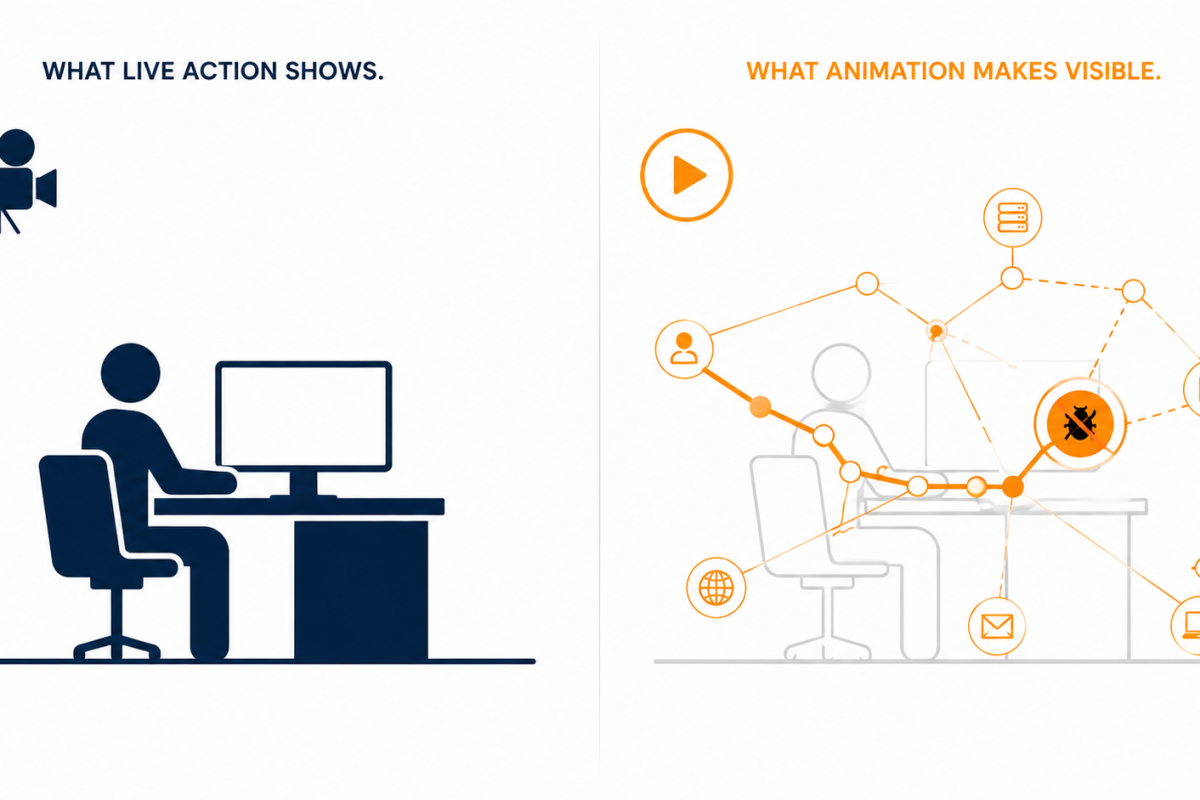
For cybersecurity products specifically, animation wins the format debate because it can visualize threats that are invisible, processes that happen silently inside a network, and outcomes that have no physical form. A live-action camera cannot film a data breach that was stopped before it started.
That is the short answer. Here is the full one.
Most B2B products have something to show on camera. A physical interface. A person using software. A before-and-after workflow with visible steps.
Cybersecurity is different. The thing your product protects against is invisible. A stolen credential happens in silence. Lateral movement through a network has no shape. A threat being detected and contained looks like nothing to anyone outside the security team.
Animation does three things live action cannot: it makes abstract concepts visible, it scales across platforms without reshooting, and it ages better than footage tied to a specific time and place. greenfroglabs
For a category built entirely on invisible value, that first point is the whole game.
A 2024 study in the Journal of Educational Psychology found that animated explanations of abstract concepts improved comprehension by 42 percent compared to text-based explanations, and 28 percent compared to live-action demonstrations using physical props. greenfroglabs
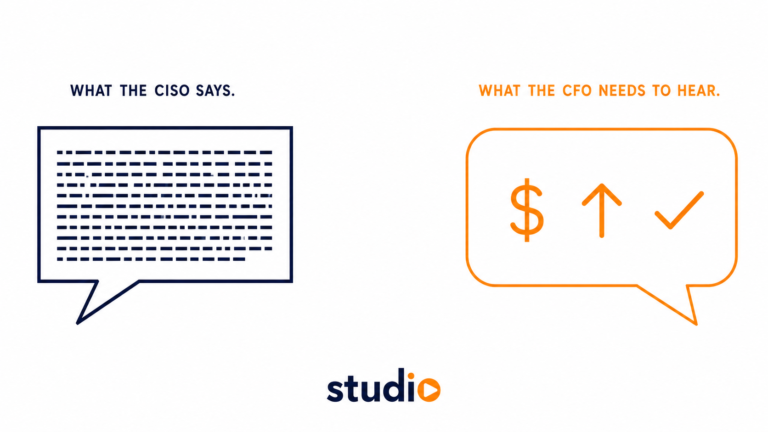
That comprehension advantage matters more in cybersecurity than in almost any other SaaS category, because the buyer evaluating your product is often a non-technical CFO or COO who has never experienced the threat you protect against.
A 60-second animation can show a stolen credential being used to log in. It can show the system catching the behavior: right username, right password, wrong device, wrong location, wrong time of day. It can show the access blocked and the attacker stopped before a single file moves.
No camera crew can film that scenario. No actor can perform it. It happens inside a network at machine speed and leaves no physical trace.
Animation builds that scene from nothing. The threat becomes visible. The protection becomes visible. The outcome becomes visible. The viewer understands the product in under a minute without needing a security background to follow the story.
B2B animated ads generate 38 percent higher click-through rates than live-action B2B ads on LinkedIn, according to LinkedIn Marketing Solutions 2025 data. That gap makes sense for this category. When the product defends against something the buyer cannot see, the format that shows it is going to outperform the format that cannot. greenfroglabs
You can see how this visual approach works for complex cybersecurity products at ayeansstudio.com/portfolio.
I want to be direct about this because most animation studios oversell their format.
Live action genuinely outperforms animation in three situations.
Customer testimonials. A real person talking about a real experience they had with your product builds trust in a way no animated character can replicate. If you have customers willing to go on camera, that footage is more credible than anything I could animate.
Founder and culture content. If your company is selling on the credibility of the people who built it, showing those people on camera is the right move. Live action performs best for trust-led content: testimonials, founder stories, and company culture. vidico
Human emotion in complex sales. When the product involves a lot of trust and the buyer is making a significant financial commitment, a video that shows real people talking through a real implementation can carry emotional weight that animation does not.
None of these apply to the homepage explainer or the top-of-funnel content where most cybersecurity companies lose non-technical buyers. For that job, animation has a structural advantage that live action cannot overcome by being better executed.
People assume animation is cheaper than live action. That is sometimes true and sometimes not. A talking-head live action video can wrap in a day. A custom animated explainer often runs several weeks. Professional custom animation for a 60-second cybersecurity video typically costs between $3,000 and $15,000 depending on complexity. Live action in a similar range produces a very different kind of content. yansmedia
The comparison that matters is not cost against cost. It is cost against outcome. An animation that makes an invisible threat visible and converts non-technical buyers into demo calls is doing a job that live action, at any budget, cannot do for this category.
If your cybersecurity product explanation relies on text and screenshots that your non-technical buyers cannot follow, the format is the problem.
Book a free 15-minute call here and I will tell you honestly whether animation is the right fix for your specific product and your specific buyer.
You cannot photograph protection. You can only show it.
Ayan Wakil
For complex or abstract products, yes. In B2B, where products are often complex and abstract, animation has an advantage over live action: it can visualize workflows, data flows, integrations, and outcomes that are impossible to film. For cybersecurity specifically, the advantage is structural. The threats your product addresses cannot be filmed because they are invisible processes happening inside a network. Animation can show them. Live action cannot. For trust-led content like testimonials and founder stories, live action is still the stronger format. The question is always what job the video needs to do, not which format looks more impressive. knowlify
Animation. You construct the scenario from scratch rather than trying to film something that has no physical form. A credential theft looks like a person logging in from an unusual location at an unusual time. Lateral movement looks like a threat actor moving from system to system, opening doors. A detection event looks like a flag, a stopped movement, a contained path. None of these need technical language to convey. The viewer sees the story happening and understands the product before you explain what it is called. That sequence, threat, detection, containment, outcome, is the visual structure that works for almost every cybersecurity product regardless of the specific technology underneath.
A talking-head live action video can wrap in a day at relatively low cost. A custom animated explainer often runs several weeks and commands a higher production fee. For a professional 60-second cybersecurity explainer with custom animation, expect $3,000 to $15,000 depending on complexity and the studio you work with. A comparable live action piece in a studio environment with professional talent runs similarly. The meaningful difference is not cost. It is what each format can do. Live action cannot show an invisible threat being stopped. Animation can. For a homepage explainer or a sales enablement video, that capability difference matters more than the price comparison. yansmedia
Three situations where live action genuinely wins. Customer testimonials, where a real person’s credibility and emotional authenticity cannot be replicated by any animated character. Founder and executive content, where the trust the audience is buying is specifically in the people who built the company. And culture or recruitment content, where showing the real environment and real people is the point. 37 percent of businesses now use hybrid videos combining live footage with animated elements, which often delivers the best of both: human credibility from the live footage and visual explanation power from the animation. For a cybersecurity company, that hybrid approach could mean a live action customer speaking to camera about the business outcome, with an animated insert showing the product working in the background. mypromovideos

Hi, I’m Ayan Wakil, the founder & CEO of Ayeans Studio.
Check out these and many other tips in our blog!