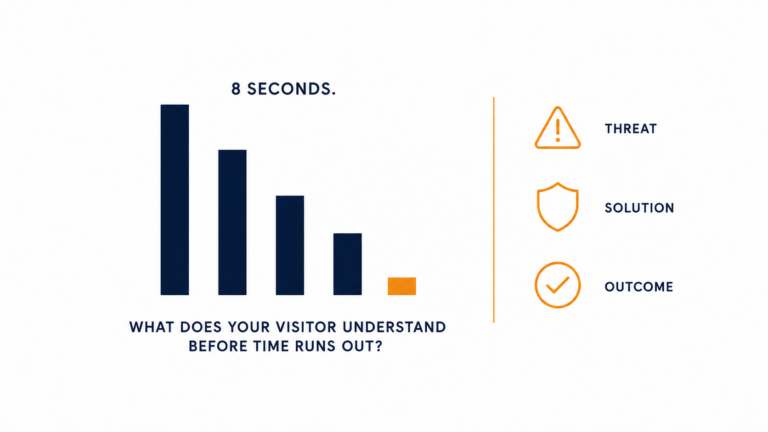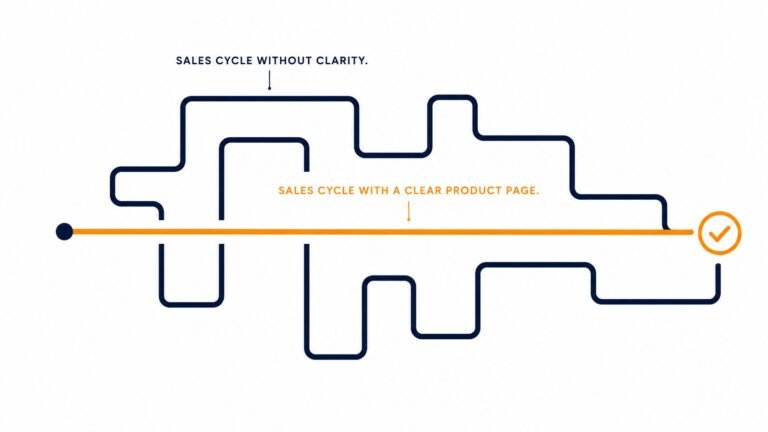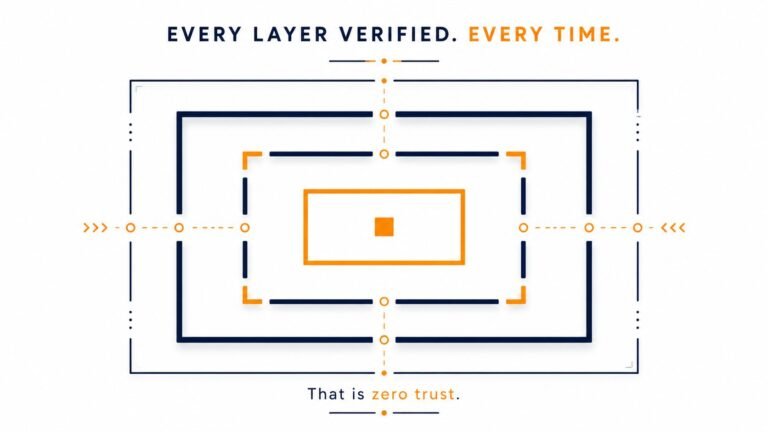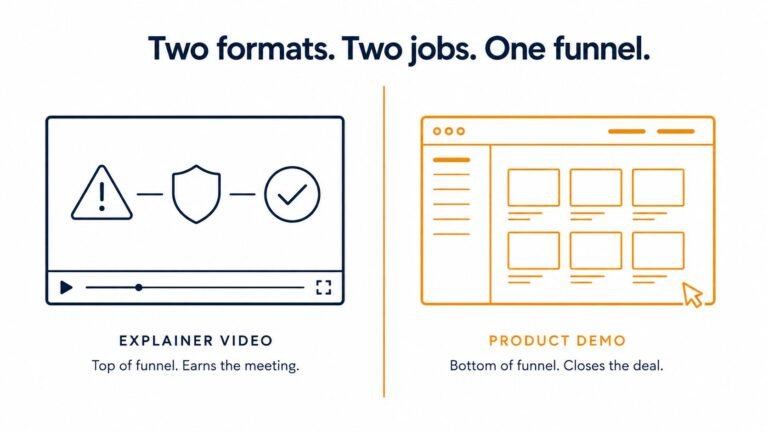

The CFO approving your endpoint protection budget needs to hear three things and only three things: what specific business risk the product addresses, what it costs the company if that risk is not addressed, and what a measurable outcome looks like ninety days after deployment. Everything else is context for a conversation they are not qualified to have and do not want to be in.
That is the answer. Here is the scene that proves it.
Picture this.
The CISO walks into the quarterly budget review. They have spent two weeks building the case. The deck is thorough. The evidence is real. They open on slide four and begin.
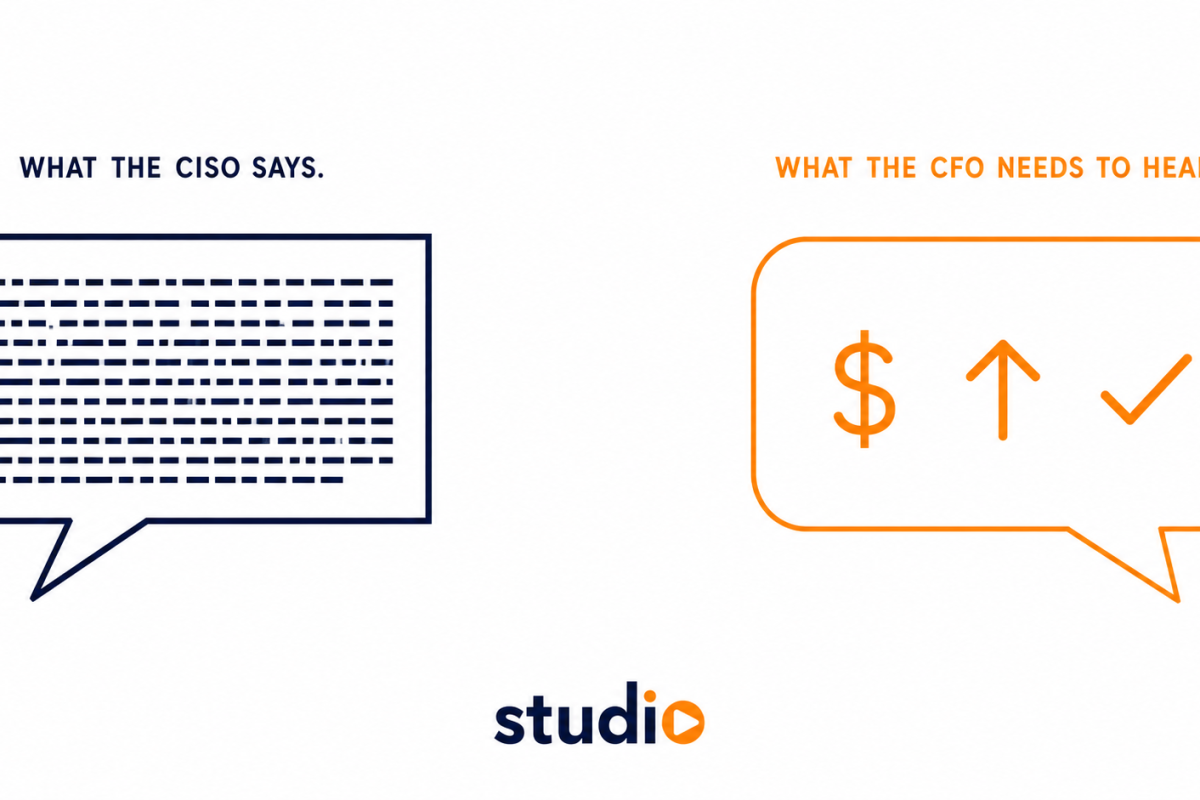
“We need to extend our EDR coverage to the remaining 30 percent of unmanaged endpoints, integrate with our SIEM for correlated alerting, and close the lateral movement gap in our east-west traffic.”
The executives sitting across the table are not dismissing the security concern. They genuinely do not understand how the technical investment connects to any business outcome they can measure or defend. cyberresilience
The CFO nods. Then asks: “And what does this cost us if we do nothing?”
The CISO answers with threat statistics. Breach probabilities. CVSS scores.
The CFO says they will revisit it next quarter.
The deal does not die because the product was wrong. It dies because the CISO reported MTTD to a CFO who needed cost-per-incident and presented coverage metrics to a board that needed risk reduction in business terms. underdefense
The CFOs who get cybersecurity budgets approved without twenty follow-up questions translate security spend into dollar-denominated risk reduction. The format is simple: “$X spent, $Y reduction in annual loss exposure, in scenario Z.” vcisolite
For endpoint protection specifically, the translation looks like this.
The risk is not “lateral movement across unmanaged endpoints.” The risk is: if an attacker compromises one device on your network and we cannot see it, they can move to every system connected to it before anyone knows something is wrong. The average dwell time before detection is still measured in weeks at most companies.
The cost of inaction is not a threat matrix. If your current annual loss expectancy across your top cyber scenarios is $740,000, and the proposed $185,000 investment reduces that to $310,000, you are presenting a 2.3x return on risk-reduction spend. That sentence a CFO can defend to a board. vcisolite
Success is not “improved endpoint visibility.” Success is: every device on the network is monitored, we can see the moment something behaves abnormally, and our response time drops from days to hours.
Those three things. That is the whole pitch.
I visit endpoint security vendor homepages regularly. The pattern is consistent.
The hero section leads with capabilities: “AI-powered endpoint detection and response with automated threat containment.” Below that, feature columns describing telemetry pipelines, behavioral analytics, and MITRE ATT&CK mapping.
All of it is accurate. None of it answers the CFO’s actual question.
The board gets fatigued when the CISO answers with a wall of technical metrics nobody in the room follows. The fix is not better slides. The fix is speaking the one language the table shares, which is money. underdefense
Most endpoint protection marketing was written to get past the CISO’s technical evaluation. It was never written for the person whose signature the deal actually needs.
A 60-second animated video can do something the deck cannot.
It can show a device getting compromised at 2am. Show the attacker moving toward the finance system. Show the endpoint protection flagging the behavior, isolating the device, blocking the path. Show the CFO walking in the next morning to a notification that a threat was caught and contained.
No jargon. No MITRE matrix. Just the before and the after.
The CISO watches it and thinks: technically accurate.
The CFO watches it and thinks: I understand what I am approving.
You can see how this approach works across complex cybersecurity products at ayeansstudio.com/portfolio.
If your endpoint protection product keeps stalling at the budget approval stage, the explanation is almost certainly the problem and not the price.
Book a free 15-minute call here and I will show you exactly where the CFO loses the thread and what a 60-second visual explanation would change for your specific product.
The CISO fights for the product. The CFO funds what they can explain to a board. Those are two different conversations and most endpoint vendors are only having one of them.
Ayan Wakil
Stop framing it as a technical investment and start framing it as a financial one. The boards and CFOs that approve security budgets at scale are the ones whose CISOs translated security into the same financial language as every other line item: current annual loss expectancy, proposed investment, expected reduction in that exposure, and the resulting return on risk-reduction spend. For endpoint protection specifically: calculate what a single compromised endpoint that goes undetected for two weeks costs the company in breach response, downtime, and reputational damage. Then compare that to the annual cost of the protection. That math, presented as a single clear number, is what moves a budget conversation forward. vcisolite
Three things, and none of them are technical. The four business objectives every CFO cares about are revenue protection, cost optimization, capital efficiency, and treasury integrity. Security spend earns approval when it maps to one of those. Endpoint protection maps most cleanly to revenue protection and cost: a breach that takes down operations for a week is a revenue problem, not a security problem, and that framing lands immediately with finance. The CFO does not need to understand what EDR stands for. They need to understand what happens to the business if a device gets compromised and nobody catches it for three weeks. cyberresilience
Because the CISO and the CFO are evaluating different things in the same meeting. The CISO has done the technical due diligence and knows the product is right. The CFO is trying to answer a different question: how does this spend compare to the risk it reduces and the other things I could fund with the same money. Average security budget growth dropped to 4% in 2025, the lowest in five years, meaning CFOs are scrutinizing security spend more carefully than they were two or three years ago. The deals that close fastest are the ones where the CISO gave the CFO language they could use in the room after the meeting, to explain the decision to a CEO or board who was not present. iansresearch
Use annual loss expectancy rather than probability. Instead of saying there is a 30 percent chance of a breach this year, say that your current annual loss exposure across your top threat scenarios is $X, and the proposed investment reduces that by $Y, producing a Z-times return on risk-reduction spend. The three-line budget defense format works because it gives the CFO something they can repeat verbatim: what the current exposure is, what the investment costs, and what reduction in exposure it buys. That repeatability is what gets deals approved. The CFO has to defend the decision to someone else after the meeting ends. Give them the sentence they need. vcisolite

Hi, I’m Ayan Wakil, the founder & CEO of Ayeans Studio.
Check out these and many other tips in our blog!