
If you are trying to justify the cost of an explainer video internally, here is the most honest framing I can give you.
A 60-second animated explainer video for a B2B SaaS company typically costs between $1,500 and $5,000 depending on complexity. The return does not show up as a clean multiplier. It shows up as fewer hours your sales team spends on basic explanation, fewer deals that stall because a champion could not explain the product to their CFO, and a homepage that holds visitors long enough for them to actually want a demo. I do not have a verified dollar figure from my own client work yet. What I have is the mechanism. And the mechanism is real.
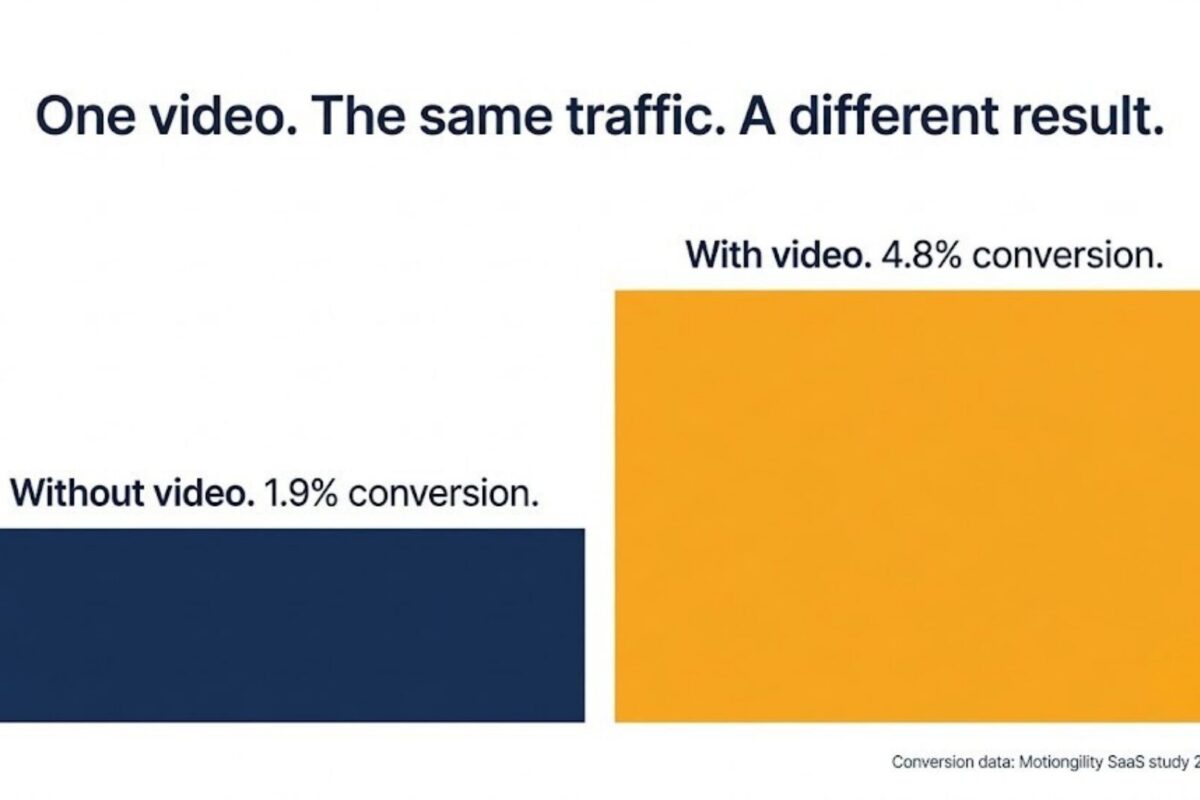
Most cybersecurity SaaS homepages convert somewhere between 1 and 3 percent of visitors. A study tracking SaaS websites found that pages with product video averaged 4.8 percent conversion, while those without averaged 1.9 percent. That is roughly a 2.5x lift. Not guaranteed. Not universal. But consistent enough across enough sites that it is worth taking seriously.
What drives that lift is not the video itself. It is what the video removes.
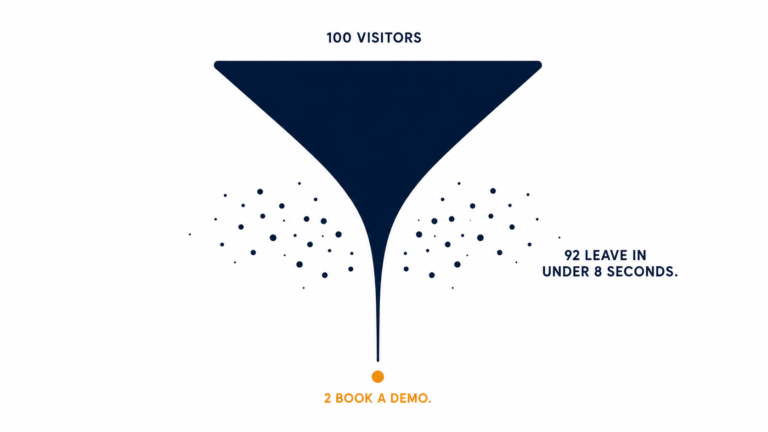
Before a video exists, every visitor has to work. They read your headline, try to decode your subheadline, look for a product screenshot that makes sense, and eventually give up or stay depending on how much effort they are willing to spend. Most spend eight seconds and leave.
A video does the work for them. It builds the mental picture instead of asking the visitor to build it. That is why time on page goes up when video is present. Visitors are not reading more. They are watching something that holds their attention without requiring effort.
Say a cybersecurity SaaS company gets 3,000 homepage visitors per month from paid LinkedIn ads at $50 a click. That is $150,000 in monthly ad spend.
At a 2 percent conversion rate, they get 60 leads.
If a homepage video pushes that to 3.5 percent, they get 105 leads from the same budget.
That is 45 extra conversations per month without spending an extra dollar on ads.
At a 20 percent close rate and a $3,000 average contract, those 45 extra leads are worth roughly $27,000 in potential monthly revenue.
The video cost $3,000 once.
I am not saying this plays out exactly like this. Real numbers depend on traffic quality, product fit, and a dozen other variables. But the math is not crazy. The direction of the effect is consistent with the data that exists.
There is a second ROI lever that is harder to quantify but I think more important.
A 60-second video sent before a first call changes what happens on the call.
Without it, the first 20 minutes of most cybersecurity sales calls are basic explanation. What the product does. Why it matters. How it is different from the five competitors the prospect is also looking at.
With a video sent beforehand, prospects show up already understanding the core concept. The first call starts at a different level. Questions are more specific. The sales rep spends less time on explanation and more time on fit.
That time is worth real money. If a sales rep costs $120,000 a year and spends 30 percent of their time on basic product explanation that a video could handle, that is $36,000 in salary going toward something that could be automated once and reused forever.
Again, I am not presenting this as a verified case study from my own portfolio. It is a logical extrapolation from how sales conversations change when prospects arrive more informed. But that logic holds up.
This is the part most video studios skip.
A 60-second explainer video fixes one specific problem: a communication gap between a product and the buyer who needs to understand it. It does not fix a product that does not solve a real problem. It does not fix a target audience that has no budget for what you are selling. It does not fix a sales process that breaks down at the proposal stage for reasons unrelated to comprehension.
If your homepage is not converting because you are targeting the wrong people, a video will not change that. If your deals are stalling because your pricing is misaligned with your market, a video will not change that either.
Video is a communication tool. It works when communication is the gap. It does nothing for the other gaps.
Be honest about which one you actually have before spending money on the video.
If you want to see how a 60-second video translates technical complexity into a story a non-technical buyer can follow, you can look at the work I have done for complex B2B products at ayeansstudio.com/portfolio.
If you want to talk through whether your specific product has a communication gap worth fixing with video, book a free 15-minute call here. I will tell you honestly whether video is the right fix or whether something else is actually the problem.
The ROI of a video is not a number. It is the cost of explaining your product badly, repeatedly, forever, versus explaining it well once and never having to again.
Ayan Wakil
Professional SaaS explainer video production in 2026 typically costs $5,000 to $15,000 for a 60 to 90-second production with custom animation. Boutique studios and independent specialists tend to run lower, between $1,500 and $5,000. Whether it is worth it depends on what problem you are solving. If your homepage is converting below 2 percent and your sales team spends the first 20 minutes of every call on basic explanation, the math for a video usually works. If your funnel problem is traffic volume or product-market fit, a video will not fix it and you should spend the money elsewhere first. fiverr
The data is real but the range is wide. SaaS websites with product videos average around 4.8 percent conversion compared to 1.9 percent for those without. Documented conversion lifts from motion graphics explainers in B2B contexts range from 20 to 34 percent improvement. The honest answer is that video helps when the existing page is losing visitors to confusion rather than to wrong-audience targeting. A video on a page that already converts well adds less. A video on a page where visitors leave in under 30 seconds can move the number meaningfully. slideshare
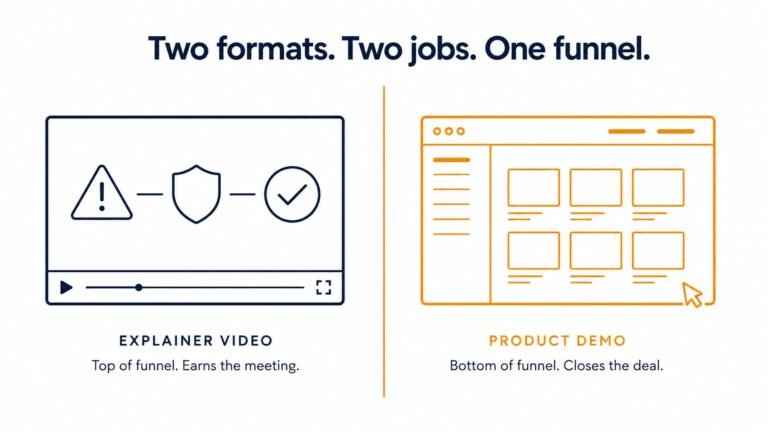
High-ROI video content for B2B SaaS focuses on practical education. Effective videos tend to be 30 to 60 second explainers that answer specific buyer questions. For homepage placement specifically, 60 seconds is the practical ceiling. Wistia engagement data consistently shows viewer drop-off sharpens after 90 seconds for embedded homepage video. The goal of a homepage video is not to replace the sales demo. It is to create enough understanding in under a minute that the visitor wants a demo. Anything longer than 90 seconds is competing with the demo for attention rather than earning it. slideshare
Every founder of a genuinely complex product believes their product is the exception. In practice, the 60-second video does not need to explain how the product works. It needs to show what problem the product solves and what the buyer's situation looks like after. That story is almost always tellable in under a minute, even for highly technical cybersecurity or infrastructure products. The technical depth belongs in your documentation and demo. The video's job is to earn the meeting where that depth gets shown.

Hi, I’m Ayan Wakil, the founder & CEO of Ayeans Studio.
Check out these and many other tips in our blog!

We provide services that successfully satisfy your Business Objectives
Ayeans Studio is a German-based Video Production Company, all set to deliver our pride services to US-based Clients