
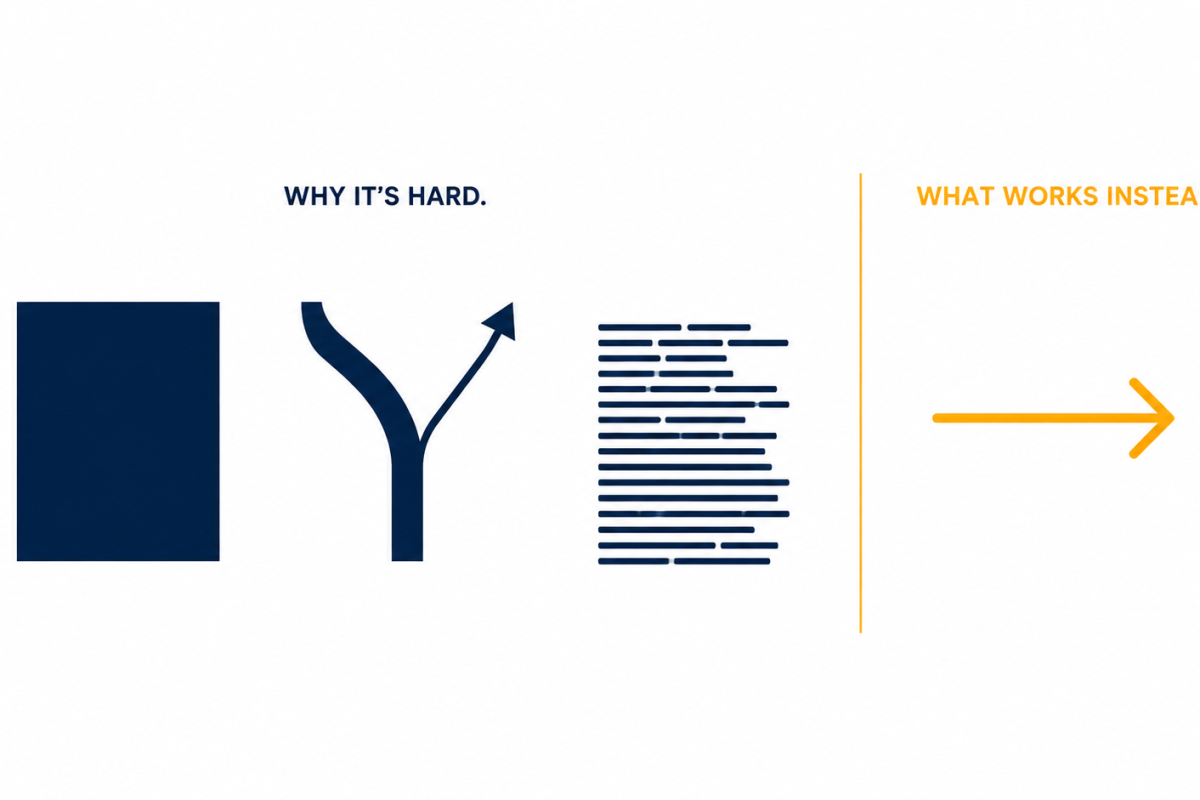
Cybersecurity is hard to market for three compounding reasons: the value the product delivers is invisible, the people approving the budget are different from the people evaluating the product, and the copy on most homepages was written by engineers for engineers. Fix all three and the marketing problem mostly goes away.
Here is what each one actually looks like and why it costs real pipeline.
Every other SaaS product can show you what it did. A CRM shows you the pipeline it organized. A marketing platform shows you the campaigns it ran. The results are visible, measurable, and easy to point to.
Cybersecurity shows you nothing. The value of your product is the breach that did not happen, the credential theft that got blocked before it spread, the ransomware that never reached the file server. There is no screenshot of a disaster that was prevented. There is no before-and-after that makes the ROI obvious.
I visited a threat detection company’s homepage last month. Impressive product. Real customers. The hero section said, “detect and respond to threats across your environment.” I had no idea what that felt like as a business outcome, because there was nothing to feel. Nothing had gone wrong. That is the entire problem with explaining this category in text.
A small identity security company I came across later had a different approach. Thirty seconds of animation at the top of the page. An attacker using a stolen credential. The system flagging the behavior. The access blocked. The team continuing to work. I understood the value immediately, because I saw the thing that almost happened.
The fix is showing the invisible threat. Not describing it. Showing it.
There are so many personas in cybersecurity, and the product and GTM motion are different for each, making it genuinely hard to build a coherent market. Substack
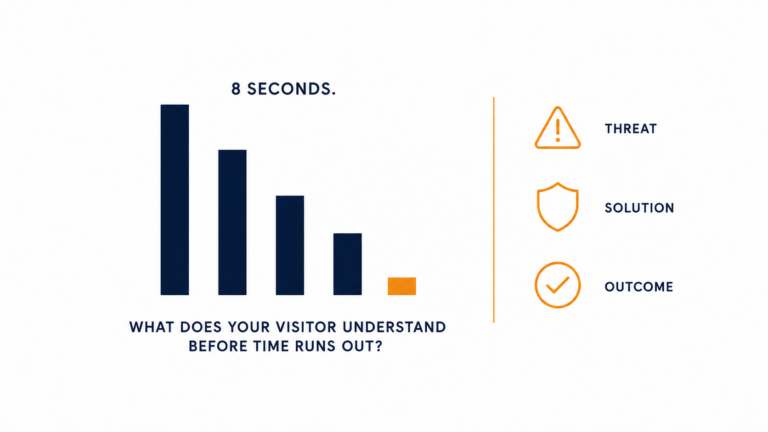
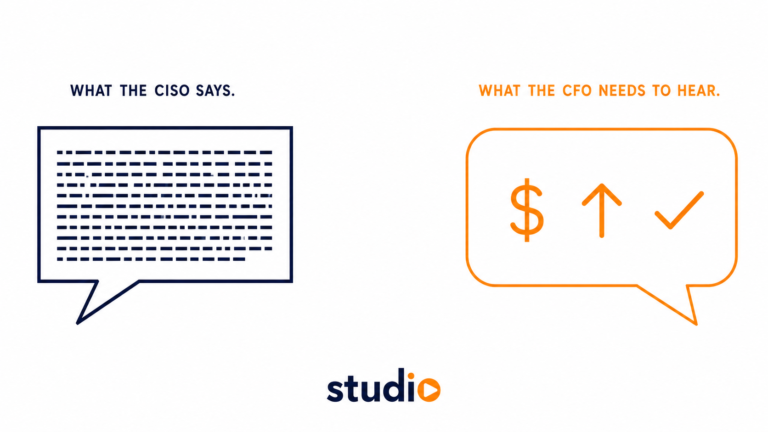
The CISO evaluates the product. The CFO approves the budget. The COO cares about operational continuity. The board wants liability clarity. These four people read the same homepage and need four different things from it.
Most cybersecurity homepages are written for one of them. Usually the CISO.
I watched this play out at a mid-sized security company. Their homepage was technically excellent. Every claim was defensible. Their product was genuinely impressive. The CISO loved it. The CFO, who was handed the vendor shortlist at the end of a committee meeting, opened the page, read the headline twice, and deferred the decision for another quarter.
The page was not wrong. It just was not written for the person who needed to say yes with money.
Real buyer research from cybersecurity-specific communities is explicit: jargon and geek speak turns buyers off, and failing to segment content for multiple buyer personas is one of the three most common marketing failures in this category. Substack
The fix is not more content. It is asking honestly who reads each piece and whether it serves them or the engineering team that signed off on it.
This one is the most fixable and the most persistent.
The product team knows the product better than anyone. They are also the worst possible people to write the homepage, because they cannot un-know what they know. They write for an audience that shares their fluency. That audience is not who the homepage needs to convert.
A cloud security company I reviewed recently had this exact problem. Their homepage opened with “AI-native cloud workload protection across hybrid and multi-cloud environments.” Their engineering team was proud of that sentence. It was accurate. It was complete. A CFO reading it for the first time understood nothing from it.
The same product explained as “we make sure attackers cannot move through your cloud systems even if they get a foothold” is longer but lands. No acronyms. No architectural terms. Just the thing that happens and why it matters.
Engineers helped build the product, so the copy speaks to engineers first. The CFO approving the spend reads it last and understands it least.
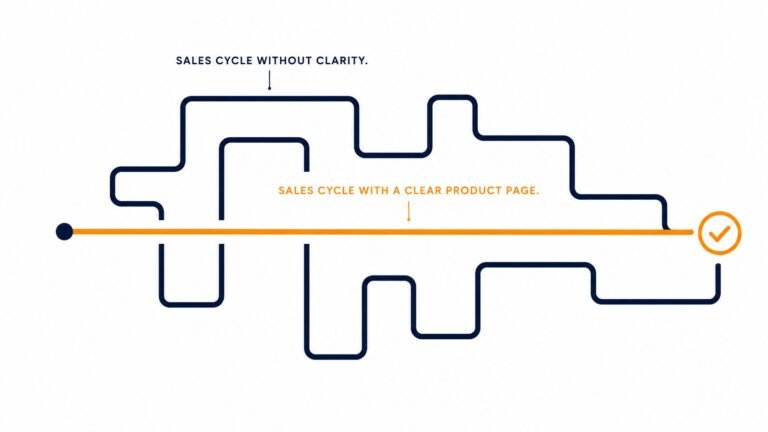
The companies winning pipeline in this category have one thing in common. They made clarity a deliberate product, not an afterthought.
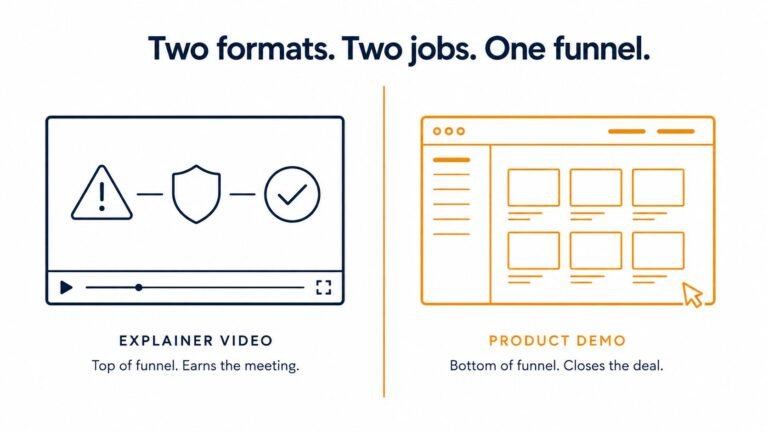
Short animated video on the homepage that shows the threat before it names the solution. Homepage copy that leads with business consequence, not product architecture. Sales decks that give the CISO technical depth and the CFO a one-page summary that does not require a security background to follow.
The video matters more than most teams realize. A 60-second animation can show what three paragraphs of copy cannot: the thing that almost happened. That is the only format that makes an invisible threat feel real to someone who has never experienced one.
You can see how this works across complex cybersecurity products at ayeansstudio.com/portfolio.
If your marketing is technically accurate and still not converting the buyers who control the budget, the problem is almost certainly one of these three things.
Book a free 15-minute call here, and I will tell you which one is costing you the most and what a visual explanation would change for your specific product.
The product is not the problem. The explanation was built for the people who already understand it.
Ayan Wakil
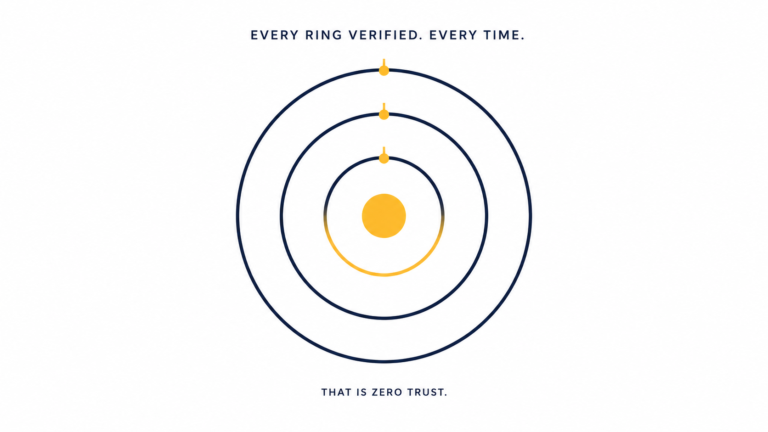
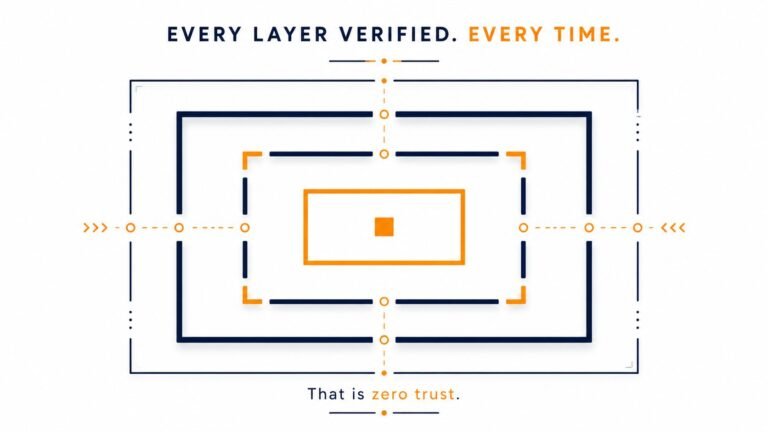
Zero trust is a security approach that requires every user and every device to verify their identity before accessing company resources, every single time, regardless of whether they are already inside the company's network. Traditional security models treated everyone inside the network as trustworthy by default, the way a locked front door assumes everyone already inside the building belongs there. Zero trust removes that assumption. Even an employee who is already logged in has to keep proving they are doing what they are supposed to be doing. The practical effect is that an attacker who steals a login credential cannot move freely through your systems, because a password alone is no longer enough to grant access.
Because vendor marketing complicated it. Forrester coined the term in 2010 as a specific architectural principle. Within a few years, dozens of vendors had attached the label to products that delivered a fraction of the actual framework, and the term stopped meaning one clear thing. Security professionals who work with the framework daily still use precise language because precision matters when you are building the controls. Non-technical buyers hear that precision and experience it as jargon they cannot decode. The concept underneath is genuinely simple. The language that grew up around it is not.
Lead with the business consequence, not the framework. Start with the specific risk in dollar terms: the average breach now costs $4.88 million, and a significant portion happen through compromised credentials that older security models would have let through unchallenged. Then explain what zero trust prevents in plain language: an attacker using a stolen password cannot move through your systems because the system checks more than just the password. Then give them a number: Forrester's research found 111% ROI and a five-month payback on a representative deployment. Those three things, risk, mechanism, return, are what a CFO needs to make a decision. The architectural explanation can come later, if they ask.
Partly, and it is worth being direct about this. The term has been applied to so many different products that it lost some of its meaning. Gartner found 35 percent of firms attempting zero trust initiatives failed due to poor planning and vendor confusion. That failure rate is real. What is also real is that the underlying principle is sound and well-documented. NIST Special Publication 800-207 provides a rigorous framework. The US federal government has mandated zero trust adoption across civilian agencies. The DoD requested nearly $1 billion specifically for zero trust transition in its 2025 budget. The hype attached to the label is a problem. The security approach underneath the label is not.

Hi, I’m Ayan Wakil, the founder & CEO of Ayeans Studio.
Check out these and many other tips in our blog!