Marcus had done this call eight times already that month.
He was the co-founder of a cloud identity security company. Thirty employees. Real product. Real customers. Genuine technology that stopped credential-based attacks before they spread.
And every single first call went the same way.
He would open the slide deck. Slide two was the problem statement. Slide three was the market context. Slide four was the product overview, which had a network diagram that he always had to explain because nobody ever understood it at first glance. By slide six he was twenty minutes in, and the prospect was still asking the question he dreaded most.
“So what exactly does it do?”
He would answer it. Patiently. Clearly. As simply as he could.
The prospect would nod. Say something like “that makes sense” in a tone that suggested it did not fully make sense. They would agree to a follow-up call. Marcus would send a recap email with three paragraphs of explanation. The prospect would read it, feel vaguely more informed, and then fail to explain it properly to their CFO when the time came.
Half the deals stalled at exactly that point.
He had started to dread the first call. Not because he did not believe in the product. Because he knew exactly how the next twenty minutes would feel.
———————————————————————————————–
Something shifted after a conversation with his head of marketing.
She said something simple that stuck with him. “If it takes twenty minutes to explain, we have not figured out what we are actually selling yet.”
She was right. The twenty-minute explanation was not just a sales problem. It was a clarity problem. The product did something specific and valuable. But the company had never been forced to distill it into its simplest possible form.
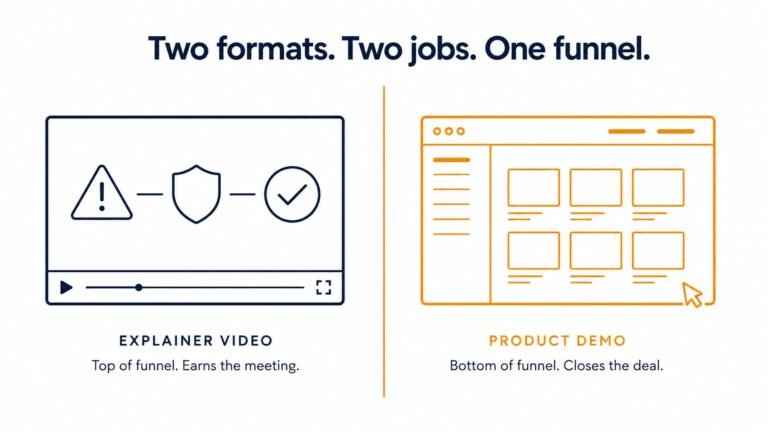
They decided to make a 60-second animated explainer video. Not a product demo. Not a recorded walkthrough. A story. Something that could live on the homepage and be sent before every first call.
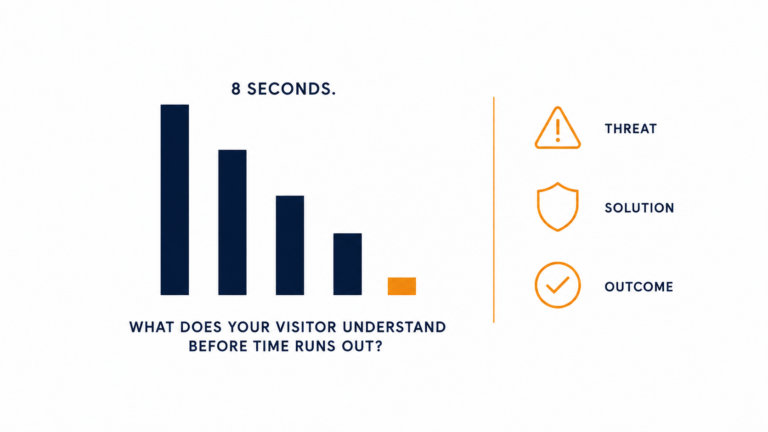
The brief was simple. Show the threat. Show the product responding. Show the outcome. Do it without using a single technical term that a non-technical buyer would have to Google.
No acronyms. No architecture diagrams. No feature lists.
Just the story of a problem being solved.
———————————————————————————————–
The video opened with a familiar scene. A mid-sized company. Employees working remotely. One set of stolen credentials. An attacker moving quietly through the system, going undetected, approaching sensitive data.
Then the product stepped in. Silently. Automatically. It noticed the behavior was wrong even though the credentials were right. It stopped the movement. It flagged the session. The attacker was blocked before a single file was touched.
The final frame showed the team continuing to work. Safe. Uninterrupted. Completely unaware of how close it had come.
Sixty seconds. No jargon. No slides. No network diagrams.
You can see how this kind of visual storytelling works for complex technical products at ayeansstudio.com/portfolio.