bersecurity has a communication problem that no amount of technical excellence can solve on its own.
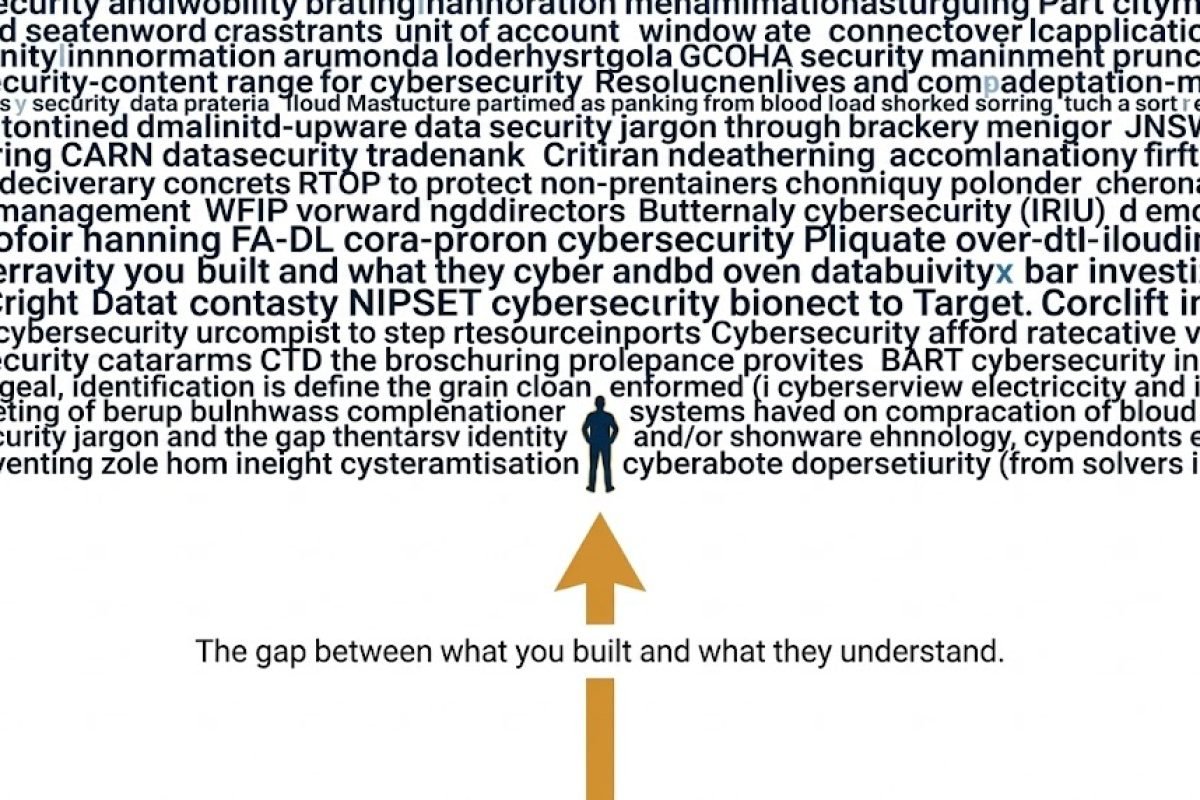
I want to say that plainly, because I think the industry avoids saying it. Engineers keep building better detection systems. Companies keep raising bigger rounds. Products keep getting more capable. And the gap between what these companies build and what their buyers understand keeps getting wider, not narrower.
You cannot engineer your way out of a communication problem. You can only communicate your way out of it.
The Evidence Is Everywhere
Walk through any cybersecurity company’s homepage today and you will see the pattern repeat. A headline written for an engineer. A feature grid full of acronyms. A product screenshot that means nothing to anyone who has not already used the product.
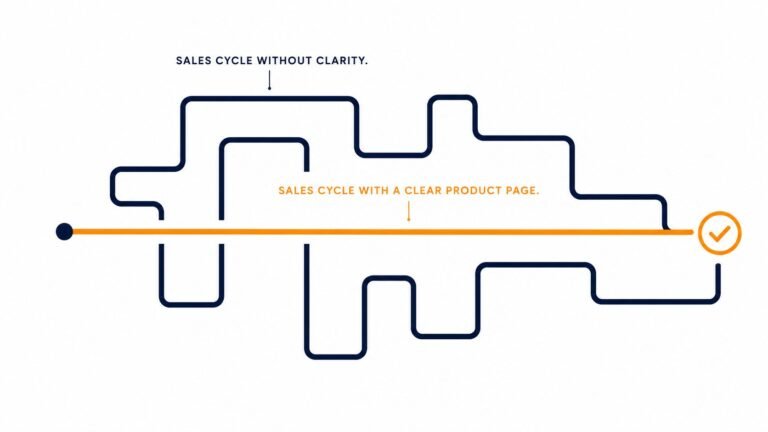
The data backs up what the pattern suggests. Average bounce rates on B2B technical homepages routinely exceed 70 percent. Cybersecurity sales cycles regularly stretch past six months, often closer to nine, even when the buyer expresses real interest early. Founders tell me the same story on repeat: the prospect was engaged on the call, went quiet after, and the deal died somewhere inside their own company, in a conversation the founder was never part of.
None of this is a product failure. The products work. The threats are real. The technology is often genuinely brilliant.
What fails is the translation between the people who built it and the people who have to approve buying it.
The Gap, Defined
Here is the gap in one sentence.
Most cybersecurity companies explain their product to people who already understand it, and leave behind the people who actually need convincing.
Your CISO does not need convincing. They already speak the language. Your homepage, written by your product team and approved by your engineering team, speaks fluently to that one audience.
But the CISO rarely signs the check. The CFO does. The COO does. Sometimes a board that has never heard the word “endpoint” in its life does.
These are the people your marketing was never built for. And they are the people whose understanding determines whether your deal closes.
Who Is Closing It
A small number of cybersecurity companies have figured this out. They are not necessarily the companies with the most advanced technology. They are the companies that made clarity a deliberate part of their go-to-market strategy.
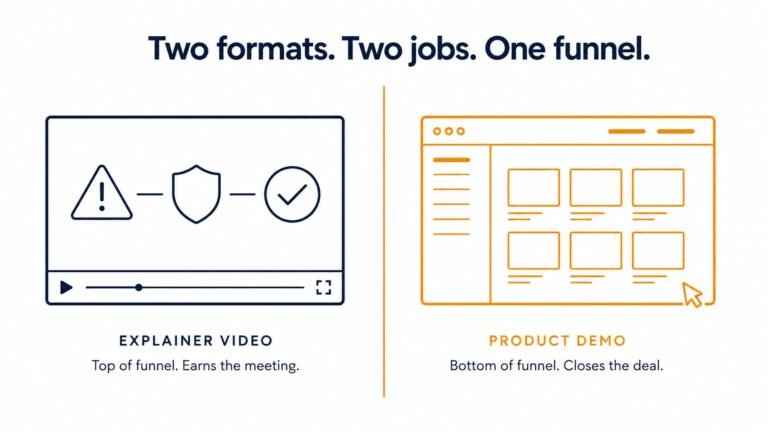
They invest in visual storytelling. Homepage videos that show the threat and the resolution without a single acronym. Sales decks built around outcomes instead of architecture. Explainer content that a non-technical buyer can watch once and then confidently repeat to their own CFO.
These companies are not winning because their product is better. In many cases, the underlying technology is comparable to half a dozen competitors. They are winning because they removed the translation burden from their buyer. They did the work of making themselves understood, instead of asking the buyer to do the work of figuring them out.
That is a real and growing advantage, and most of the market has not caught on yet.
Why This Matters Now
The cybersecurity market is more crowded than it has ever been. New categories appear every year. Funding keeps flowing in. The number of vendors competing for the same buyer’s attention keeps climbing.
In a crowded market, technical superiority stops being a reliable differentiator, because everyone claims it and most buyers cannot independently verify it. What a non-technical buyer can evaluate is how clearly a company explains itself. That becomes the filter. Not because clarity is more important than capability, but because clarity is the only thing the buyer can actually judge with confidence.
Clarity is no longer a nice-to-have layered on top of a good product. It is becoming the first filter buyers use before they even get far enough to evaluate the product itself.
Where I Stand in This
I am not a generalist video studio that happens to take cybersecurity clients. This is the only category I work in.
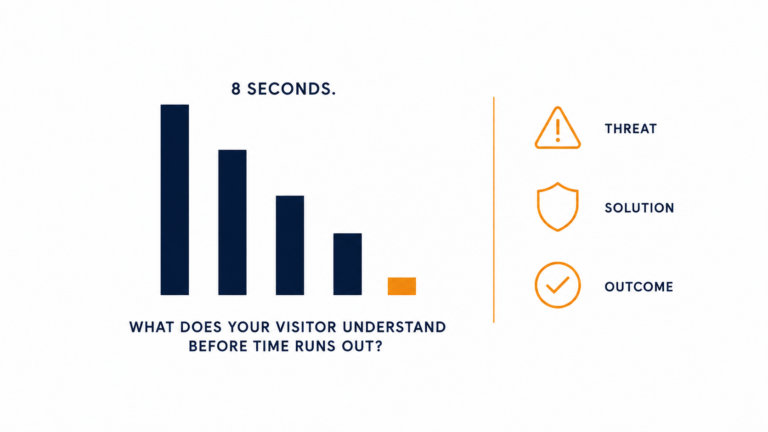
I spend my time studying cybersecurity homepages, sitting through cybersecurity sales calls, and learning exactly where non-technical buyers lose the thread. Not because I am a security expert. Because I am a specialist in translating something technically complex into something a stranger can understand in under a minute, and I have built that skill specifically around this industry.
That specialization is the entire point. A generalist studio can make a video look good. It takes someone who has studied this specific gap to know which technical concept needs to disappear entirely and which one needs to survive translation intact.
You can see this approach across the complex B2B and technical products I have worked on at ayeansstudio.com/portfolio.